
Broken Spring Repair in Elgin, IL
A snapped spring is the single most common reason a garage door stops working, and it's also the single most dangerous repair to attempt yourself. Marcus Reyes and his team handle spring replacement safely, every time.
- Locally owned since 2017
- Insured, background-checked techs
- Free upfront quotes
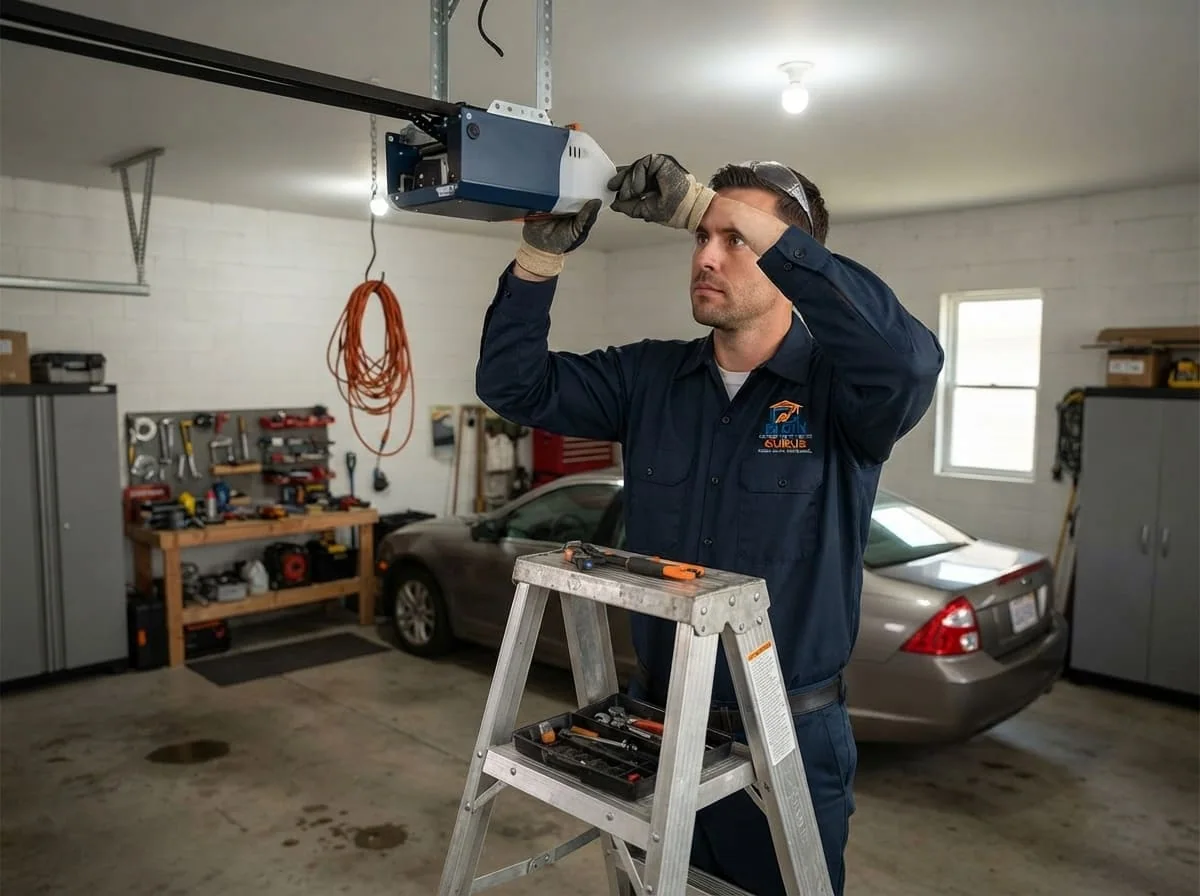
If your garage door won't budge, sounds like a gunshot went off in the garage, or the door only makes it a few inches before stalling, a broken spring is almost always the cause. Springs do the heavy lifting on a garage door system. A standard steel sectional door can weigh well over a hundred pounds, and the spring or springs are what counterbalance that weight so the opener motor only has to nudge the door along rather than lift it outright. When a spring goes, that balance disappears instantly.
Elgin's winters make this a genuinely local problem, not just a general home-maintenance issue. Steel contracts as temperatures drop, and a torsion spring that's already near the end of its cycle life is far more likely to let go on a fifteen-degree January morning than in July. We see a real seasonal pattern in service calls across Elgin, South Elgin, St. Charles, and the rest of the towns we cover, with spring failures climbing every winter.
This page covers how to tell a torsion spring failure from an extension spring failure, why springs actually break, why this is not a repair to take on yourself, and how our approach differs from a quick swap-and-go spring replacement.
Torsion Spring Failure vs. Extension Spring Failure: Know the Signs
Most garage doors installed in the last few decades use one of two spring systems, and they fail differently.
Torsion springs sit on a metal shaft directly above the closed door, usually anchored to a center bracket, and twist to store energy. A torsion spring failure is usually loud and obvious. Homeowners often describe it as a bang, a car backfiring, or a gunshot, because the spring is under such high tension that it separates suddenly, sometimes with the two halves visibly gapped apart on the shaft. After it happens, the door typically will not lift at all, or an opener will strain and reverse because the counterbalance is gone.
Extension springs run along the horizontal tracks on either side of the door and stretch and contract instead of twisting. Their failure signs are a little different: a door that feels uneven or crooked as it opens, one side that seems to lag or drop, a visible gap or stretched coil in one of the springs, or a loud snap followed by the door sagging to one side. Extension springs should always have a safety cable running through the center of the coil; if that cable is missing, a broken spring can turn into a projectile, which is one of the specific hazards the U.S. Consumer Product Safety Commission has documented in home garage door incidents.
- Door won't open at all, or opener motor strains and reverses
- Loud bang or snap from the garage, often first thing in the morning
- Visible gap in a torsion spring coil above the door
- Door opens unevenly or one side drops faster than the other (extension springs)
- Cables look loose or slack at the bottom brackets
- Door feels unusually heavy when lifted manually
Why Springs Break: Cycle Life and Elgin's Cold Winters
Garage door springs are rated for a certain number of open-close cycles rather than a fixed number of years. Industry cycle-life standards reference figures in the tens of thousands of cycles for a properly sized spring, but real-world life depends heavily on how the door is used, how well it's balanced, and what it's exposed to.
A handful of factors shorten spring life faster than normal wear alone. A door that's out of balance forces the spring to work harder on every cycle. Rust from moisture exposure weakens the wire itself, which is a common issue in garages that see road salt and slush tracked in all winter. Openers that have been left doing more of the lifting than they should, because the spring tension has already drifted off, put extra strain on both the spring and the motor.
Then there's the cold. Steel contracts as temperatures drop, and a torsion spring that's already carrying metal fatigue from years of cycles is measurably more brittle on a cold morning than on a warm afternoon. With Elgin's January average highs hovering in the low thirties and lows well below freezing some mornings, we get a predictable jump in spring-failure calls every winter, almost always concentrated on the coldest stretches of the season. It's not that cold weather breaks a healthy spring out of nowhere. It's that cold weather is usually the final straw on a spring that was already close to the end of its cycle life.
Why DIY Spring Repair Is Genuinely Dangerous
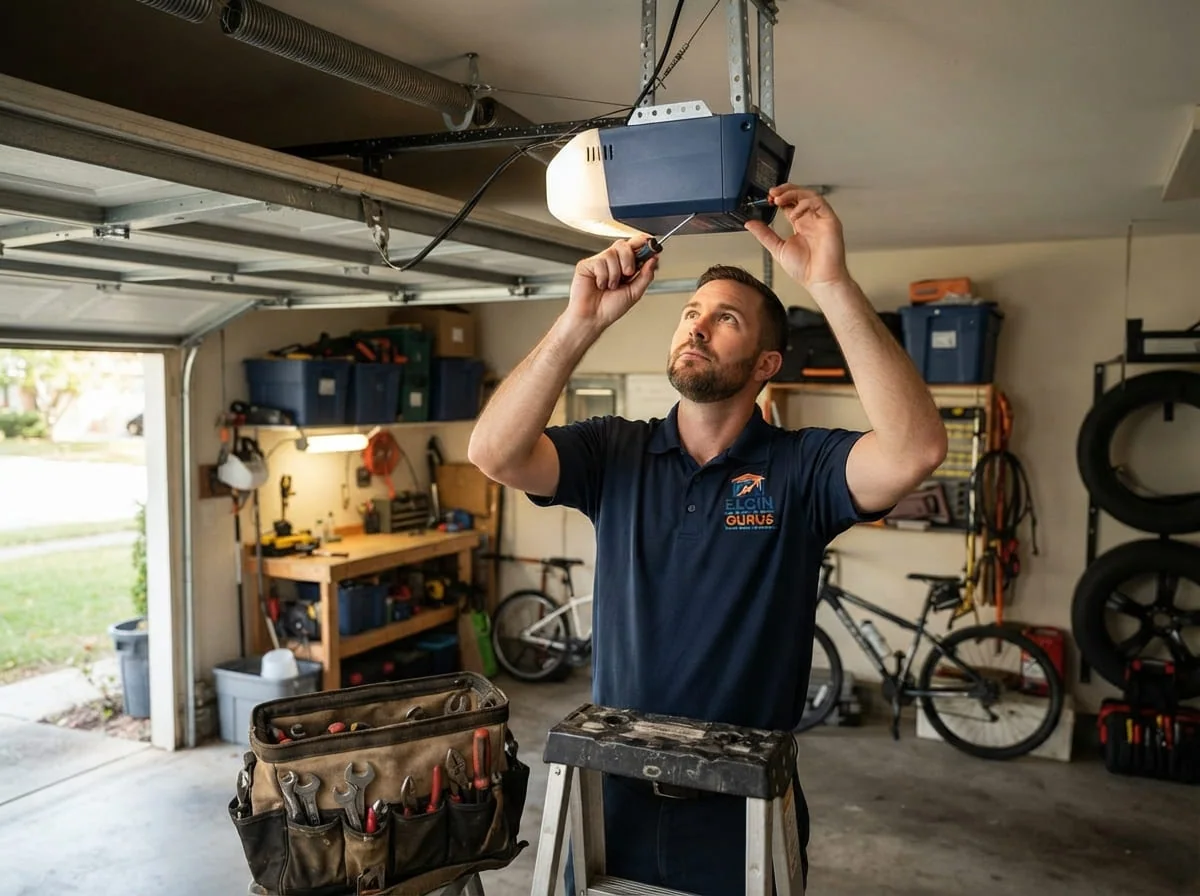
We understand the instinct to fix this yourself. A stuck garage door is disruptive, and a spring looks like a simple part. It isn't. Garage door springs, especially torsion springs, store an enormous amount of tension, and that tension has to be released or applied using specific tools and a specific sequence. Winding cones, winding bars sized correctly for the spring, and a stable ladder position all matter, and a mistake at any step can cause the bar to spin out of control or the spring to release its full tension all at once.
The Consumer Product Safety Commission has tracked garage door spring incidents for years, and the injuries that show up in that data are serious: broken fingers and hands, facial injuries, and eye injuries from flying coil segments or winding bars, along with cases of doors falling on people who were working underneath them without securing the door first. Extension spring systems carry an added risk when the safety containment cable is missing or damaged, because a spring under tension can travel a significant distance if it separates.
This is one repair where the cost of a mistake is not a redo, it's an emergency room visit. We're glad to walk any customer through what we find and why a repair is needed, but the actual spring work should be left to a technician who does it routinely and has the right tools on hand.
How We Approach Spring Replacement
Marcus built this company on the idea that a technician should diagnose the whole door system before touching anything, not just swap the part that failed and move on. A broken spring is rarely an isolated event. It's often a symptom of a door that's been out of balance for a while, rollers that are dragging and adding resistance, or cables and pulleys that have been quietly wearing down alongside the spring.
When we come out for a spring call, we check the door's balance, inspect the cables and bottom brackets for wear, look at the rollers and track alignment, and confirm the opener's force settings haven't drifted to compensate for the failing spring. If we replace a torsion spring, we also check whether the shaft, center bearing, and end bearing plates are in good shape, since a worn bearing will shorten the life of a brand-new spring fast.
We explain what we find in plain terms and quote the work upfront before we do anything, so there are no surprises when the job is done. If the spring is the only issue, that's what we fix. If something else is contributing to the failure, we'll tell you and let you decide how to proceed. Sales-quota pressure to upsell parts a door doesn't need is exactly what Marcus left behind when he started this company, and it's not how we operate.
One Spring or Two? And Other Practical Questions
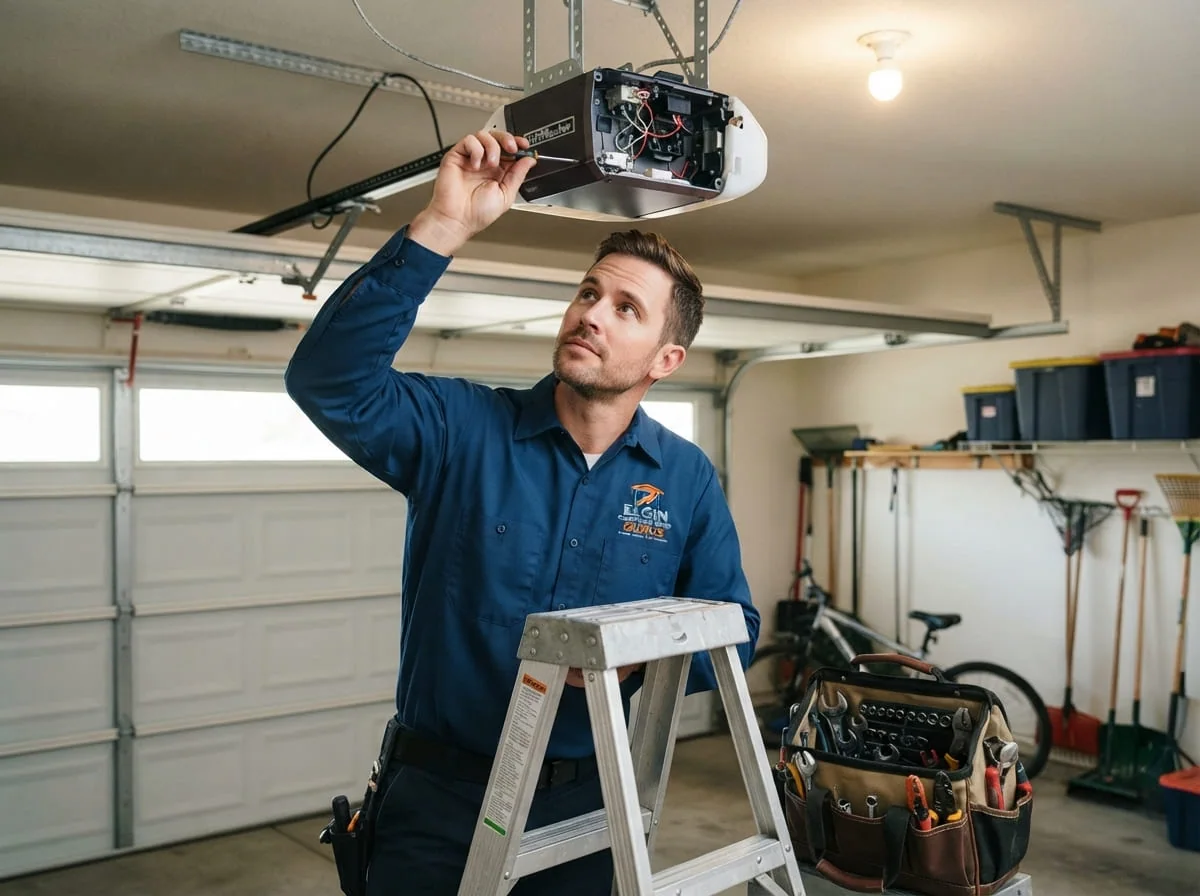
Most residential torsion spring systems use two springs, one on each side of the center bracket, sized to work together for the specific weight of that door. When one spring fails, the other has usually absorbed extra stress in the process and is closer to the end of its own cycle life, even if it hasn't broken yet. We'll check the condition of both and explain what we see rather than assuming a matched replacement is automatically needed.
Extension spring systems are more often original single-spring-per-side setups on older doors, and we pay close attention to whether the required safety cables are present and in good condition, since that's a detail that sometimes gets missed on older installations or prior repairs.
Why Elgin Homeowners Call Us for Spring Repair
We've been doing this work out of our Brookside Drive shop since 2017, and spring calls are some of the most common jobs we run across Elgin, South Elgin, St. Charles, Bartlett, and the rest of the towns we serve. We show up with the right tools for both torsion and extension systems, explain the failure in plain language, and give you an honest, upfront quote before any work starts.
Same-day appointments are available where possible, since a door that won't open is disruptive to daily life, and we return after-hours calls first thing the next business day if you reach out outside our regular hours.
What to Expect When You Call
Phone diagnosis
We ask a few quick questions about the noise, the door's behavior, and whether it's a torsion or extension system to arrive prepared.
On-site inspection
The technician checks the spring, cables, bearings, rollers, and door balance before recommending any repair.
Upfront quote
You get a clear explanation of what failed and why, plus a firm quote before any work begins.
Safe spring replacement
We fully unwind or release the old spring's tension using proper winding tools, then install and tension the replacement to match your door's weight.
Balance and safety check
Before we leave, we test the door's balance, cycle it several times, and confirm the opener's force settings are correct for the new spring.
Broken Spring Repair in Elgin, IL FAQs
How much does garage door spring repair cost?
It depends on whether one or both springs need replacing, whether it's a torsion or extension system, and the condition of related parts like cables and bearings. We provide a free, upfront quote after inspecting the door so you know the exact cost before any work begins.
Can I replace a garage door spring myself?
We strongly advise against it. Torsion and extension springs store enough tension to cause serious injury if released incorrectly, and the U.S. Consumer Product Safety Commission has documented broken bones, facial injuries, and eye injuries from DIY spring attempts. This is one repair worth leaving to someone who does it regularly.
How long does a garage door spring last?
Springs are rated by cycle count rather than years, so life expectancy depends on how often the door is used, whether it's properly balanced, and exposure to moisture and cold. A door used several times a day will wear through its spring's rated cycles faster than one used occasionally.
Why do garage door springs break more in winter?
Cold weather causes steel to contract, which adds stress to a spring that's already fatigued from normal cycle wear. Elgin's winter temperatures make this a real seasonal pattern, with spring failures becoming noticeably more common during the coldest stretches of the season.
Is it normal for only one spring to break?
Yes, especially on a two-spring torsion system where one side simply reaches the end of its cycle life before the other. That said, we always check the condition of both springs during a repair, since the surviving spring has often absorbed extra strain and may not be far behind.
How long does a spring replacement take?
A straightforward spring replacement is usually a same-visit repair once a technician is on-site, though the exact time depends on whether other components like cables, rollers, or bearings also need attention.
Can I still open my garage door manually with a broken spring?
Technically you may be able to lift it, but without the spring's counterbalance the door can weigh well over a hundred pounds and may drop suddenly or unevenly. We recommend leaving the door closed and avoiding manual operation until a technician has inspected it.
Need Broken Spring Repair in Elgin, IL?
Elgin Garage Door Repair Gurus is ready to help — call now for a free, upfront quote.