
Garage Door Repair in Elgin, IL
Springs, cables, rollers, tracks, openers, panels — whatever's wrong with your door, we diagnose the real problem before we quote anything, then fix it right the first time.
- Locally owned since 2017
- Insured, background-checked techs
- Free upfront quotes
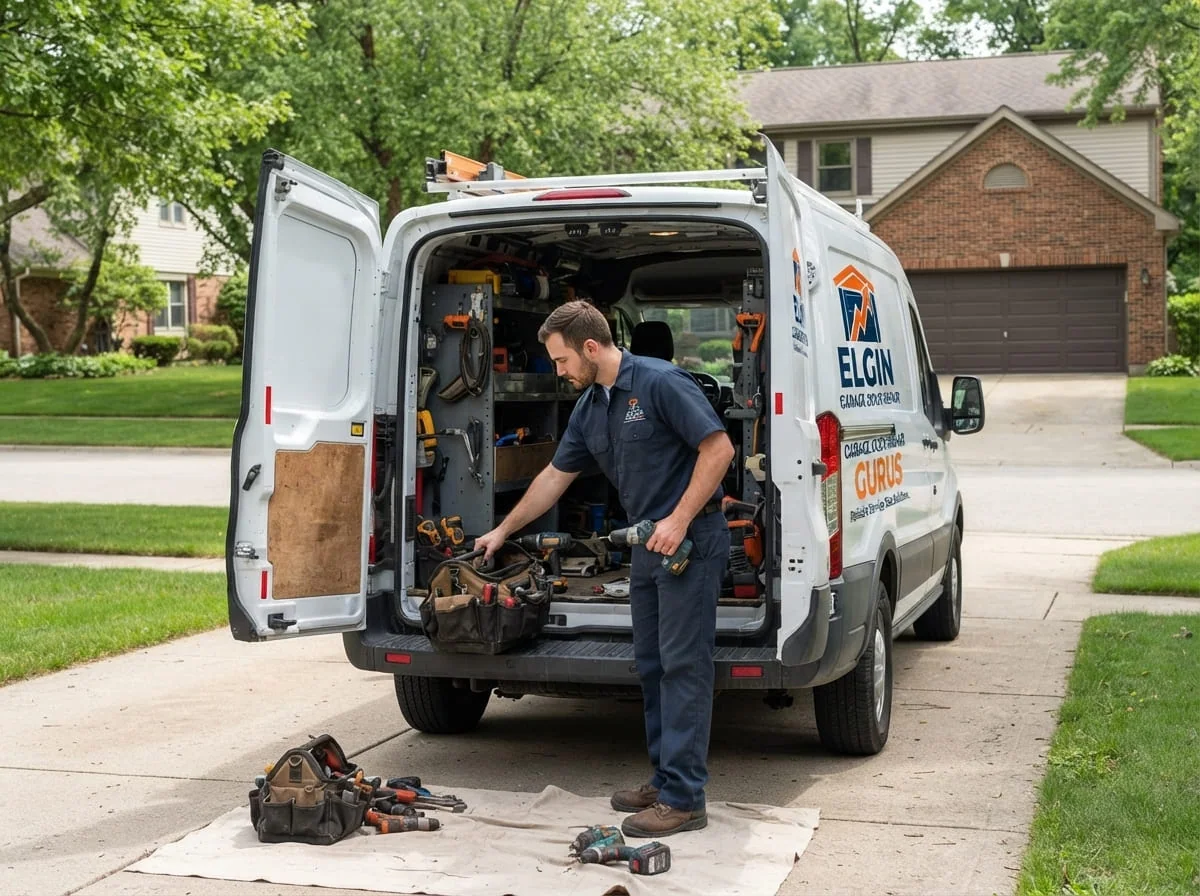
A garage door is a system of parts working together under real tension and weight, and when one part fails the whole door usually stops behaving. Elgin Garage Door Repair Gurus handles the full range of residential garage door repairs across Elgin and the surrounding Kane and Cook County suburbs: broken or worn-out springs, snapped or frayed cables, cracked rollers, bent or misaligned tracks, opener failures, damaged panels, doors that have jumped their track, and doors that grind, bang, or squeal every time they move.
Elgin's winters put real stress on these systems. Cold temperatures make torsion springs contract and lose tension, which is a big part of why so many spring failures around here happen on the coldest days of the year. Metal tracks contract and can bind, nylon rollers get brittle and crack, and thickened lubricant makes openers strain harder than they should. Freeze-thaw cycles can also shift a garage's concrete slab slightly over time, which throws off track alignment. None of that is unusual for a Fox River Valley winter — it's just what these systems have to deal with here, and it's why regular diagnostic visits catch problems early.
Marcus Reyes started this company in 2017 on a simple idea: tell the customer exactly what's wrong, quote only what actually needs to be done, and never sell a repair as a replacement. That approach still shapes every service call. This page is a starting point for understanding garage door repair broadly — for a deeper look at a specific problem, the linked pages below cover springs, cables, rollers, tracks, openers, panels, off-track doors, and noise in more detail.
Signs Your Garage Door Needs Repair
Most garage door problems announce themselves before they become a full breakdown. Recognizing the early signs can mean the difference between a straightforward repair and a door that won't open at all.
- The door is noticeably heavier or harder to lift by hand — often an early sign of spring wear, since springs do most of the lifting work, not the opener.
- Grinding, popping, or a loud bang when the door moves, which can point to a spring, a bad roller, or a track problem.
- The door looks crooked or hangs unevenly in the opening, a common symptom of a door off its track or a broken cable on one side.
- Squealing or scraping sounds on every cycle, usually traced to worn rollers or a track that needs attention — see our page on noisy garage door repair for the common causes.
- The opener runs but the door doesn't move, or moves partway and reverses, which often points to the opener itself, its sensors, or its gearing rather than the door.
- Visible dents, cracks, or a warped section in one panel, which may only need that one panel addressed rather than the whole door.
Any of these symptoms is worth a diagnostic visit sooner rather than later. A door that's struggling still often fails completely within days or weeks, sometimes at the least convenient moment.
The Most Common Repairs We Handle
Garage door repair covers a wide range of components, and the right fix depends entirely on what's actually failed. Here's a broad look at the categories we see most in the Elgin area.
- Springs — torsion springs (mounted above the door) and extension springs (mounted along the upper tracks) are rated for a certain number of open-close cycles and lose strength over time, especially with rust or cold-weather stress. Full detail on symptoms and safety is on our broken spring repair page.
- Cables — these work alongside the springs to lift the door evenly on both sides, and a frayed or snapped cable is why a door often looks tilted or drops suddenly on one side.
- Rollers — nylon or steel rollers guide the door along the track, and cracked or worn rollers are one of the most common sources of grinding noise and rough movement.
- Tracks — bent, dented, or misaligned tracks can bind the door partway through its cycle or let it jump the track entirely.
- Openers — motor, gear, sensor, and circuit board issues all fall under opener repair, and a surprising number of "broken door" calls turn out to be an opener problem with a perfectly good door.
- Panels — impact damage from a vehicle, hail, or age-related warping can usually be addressed by replacing the single affected panel rather than the entire door.
Because these systems interact, a single symptom can have more than one possible cause. A cracked roller left alone eventually strains a track; a weak spring eventually strains an opener trying to compensate. That's why a proper diagnostic looks at the whole door, not just the part that seems obviously broken.
How a Repair Visit Works
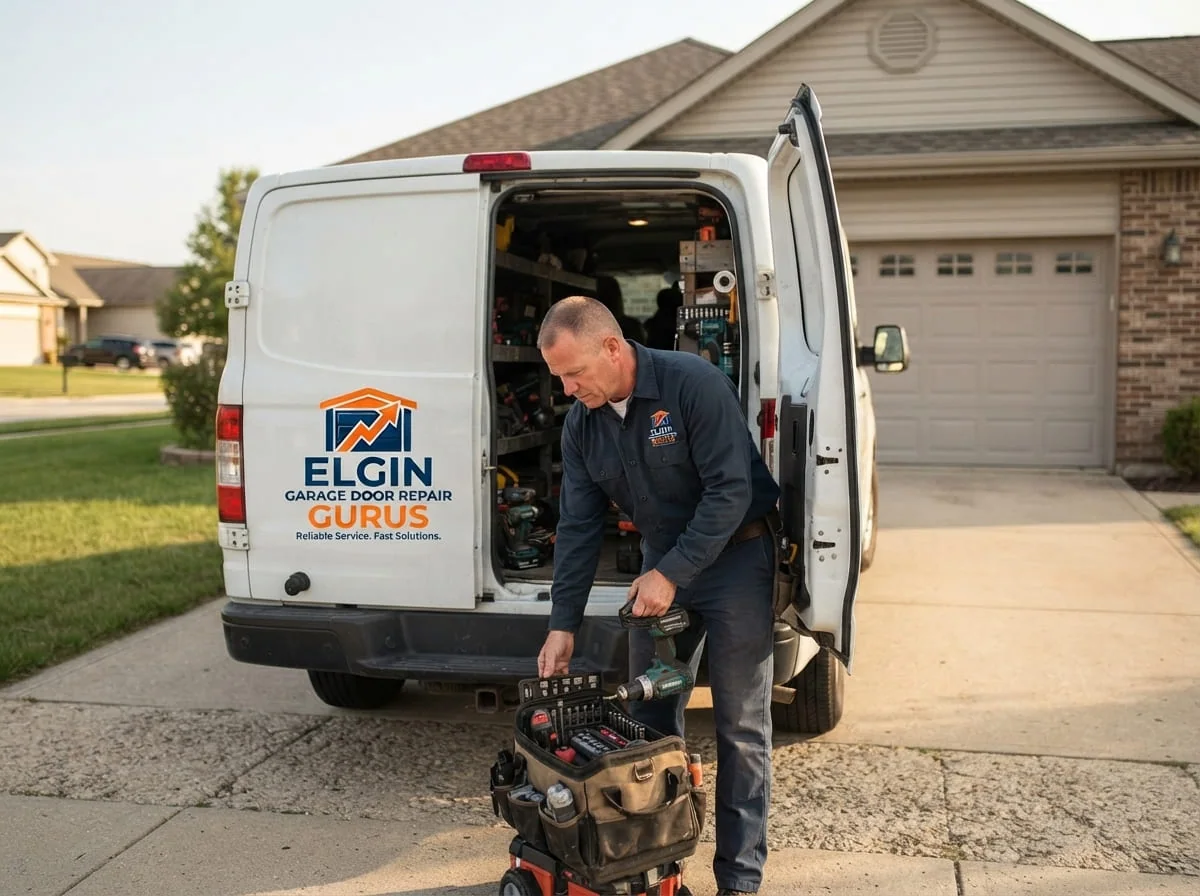
Every repair call starts with a real inspection, not a guess based on a phone description. A technician checks the springs' tension and condition, the cables, the rollers and track alignment, the opener's operation and safety sensors, and the panels, then explains in plain terms what's actually wrong and what it will take to fix it.
Most residential repairs — a spring replacement, a cable, a set of rollers, a track adjustment, or an opener fix — are completed in a single visit once the parts needed are confirmed on site. More involved issues, like a bent track paired with panel damage, may take a bit longer to source the right parts, and that gets communicated up front rather than as a surprise.
Why DIY Garage Door Repair Is Riskier Than It Looks
A lot of garage door repair looks simple enough for a confident homeowner to attempt, and some of it genuinely is — tightening a loose bolt or lubricating a track isn't dangerous. Spring and cable work is a different category entirely. Torsion springs store enormous mechanical energy under tension, and a spring or cable that lets go while someone is working on it can cause serious injury. This isn't an exaggeration meant to drum up business; it's a well-documented risk, which is part of why extension spring systems require safety containment cables under CPSC guidance in the first place.
Beyond the safety issue, a door that's improperly adjusted after a DIY repair can develop uneven wear on the opposite side, throw off the opener's force settings, or fail again within weeks because the underlying cause was never actually addressed. A qualified technician isn't just installing a part — they're re-balancing the whole system so it isn't fighting itself on the next cycle.
How Elgin Winters Affect Repair Timing
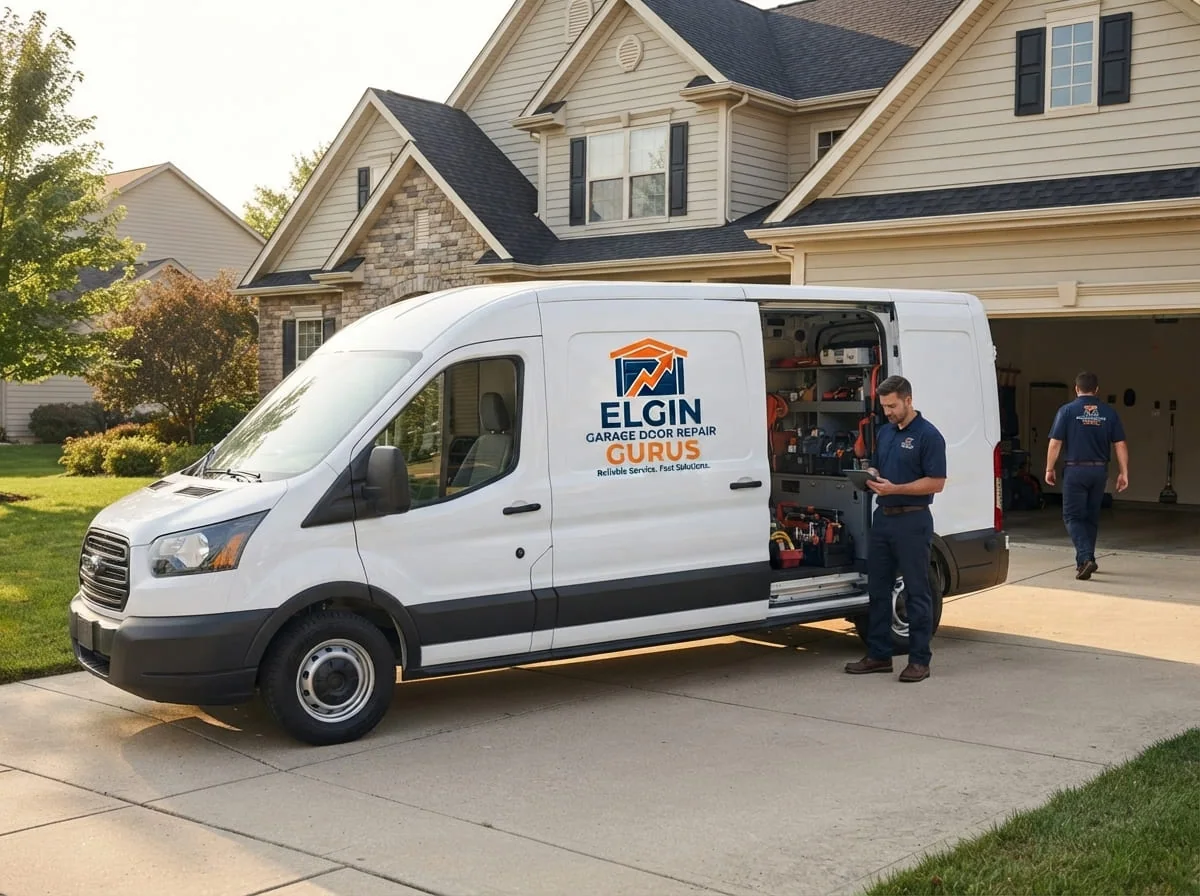
Cold weather is the single biggest driver of garage door repair calls in this area, and it isn't a coincidence. Torsion springs are rated for a set number of open-close cycles under normal conditions, referenced by manufacturers against standards like ANSI/DASMA 102, but cold temperatures make the steel more brittle and change how much tension the spring carries at rest. A spring that had a little life left in October can snap outright in January. Rollers get brittle in the cold too, and a garage slab that shifts slightly with the freeze-thaw cycle can nudge a track just enough to cause binding.
None of this means winter repairs are more complicated to perform — they're the same repairs, just more frequent and, if a spring has already failed, less safe to leave alone since a fully collapsed spring often means the door can't be opened by hand at all.
Why Elgin Homeowners Call Us for Repairs
Marcus Reyes built this company around a specific frustration from his years working for a large franchise operation: technicians pushed to upsell full replacements and add-on plans to customers who often just needed one part fixed. Elgin Garage Door Repair Gurus operates the other way. A technician diagnoses first, explains what's actually wrong in plain language, and quotes only the repair that's needed — not the most expensive option on the list.
The company has been doing this in Elgin and the surrounding suburbs since 2017, with technicians who are insured and background-checked, upfront pricing before any work begins, and same-day appointments where possible. Repairs are workmanship-backed, and most calls result in a same-visit fix once the issue is confirmed.
What to Expect When You Call
Describe the problem
Call and explain what the door is doing — noise, refusal to open, a visible symptom — so the technician can bring the right parts on the first visit.
On-site diagnostic
A technician inspects the springs, cables, rollers, tracks, opener, and panels to identify the actual cause rather than just the obvious symptom.
Upfront explanation and quote
You get a plain-language explanation of what's wrong and a clear quote before any repair work starts.
Repair completed
Most repairs are finished the same visit, with the technician re-balancing and testing the full system afterward, not just the failed part.
Final walkthrough
The technician runs the door through a full cycle with you and confirms it's opening, closing, and reversing safely before leaving.
Garage Door Repair in Elgin, IL FAQs
How much does garage door repair cost?
Cost depends on which part failed, the size and type of door, and whether one component or several need attention. We provide a free, upfront quote after the diagnostic so you know exactly what you're paying for before any work begins.
Can I repair a garage door myself?
Minor tasks like lubricating a track or tightening visible hardware are usually fine for a homeowner. Spring, cable, and track alignment work involves stored mechanical tension that can cause serious injury if handled without the right tools and experience, so those are best left to a technician.
How long does a typical garage door repair take?
Most single-issue repairs — a spring, a cable, rollers, or an opener fix — are completed in one visit, often within a couple of hours once the problem is confirmed and parts are on hand. More complex issues involving multiple components can take longer.
Is a broken garage door spring dangerous?
Yes. A torsion or extension spring under tension can cause serious injury if it releases unexpectedly, which is why spring replacement isn't a recommended DIY project. A collapsed spring also usually means the door is too heavy to lift safely by hand until it's replaced.
Why won't my garage door close all the way?
This is often a misaligned safety sensor, an obstruction the sensors are detecting, a track that's slightly bent, or opener force settings that need adjustment. A diagnostic visit can usually pinpoint which one it is quickly.
Do you repair all types of garage doors?
We work on residential sectional garage doors and their opener systems across Elgin and the surrounding suburbs. Call and describe your door and the issue, and we can tell you whether it's something we can address on the visit.
How do I know if I need a repair or a full replacement?
Most issues — springs, cables, rollers, tracks, openers, even a damaged panel — can be repaired without replacing the whole door. Replacement usually only makes sense when the door itself is structurally compromised or so old that matching parts are impractical, and a technician will tell you honestly which situation you're in.
Need Garage Door Repair in Elgin, IL?
Elgin Garage Door Repair Gurus is ready to help — call now for a free, upfront quote.