
Residential Garage Doors in Elgin, IL
From Victorian-era homes near downtown Elgin to newer builds off Randall Road, we repair, install, and maintain garage doors for single-family homes across Elgin and the surrounding suburbs.
- Locally owned since 2017
- Insured, background-checked techs
- Free upfront quotes
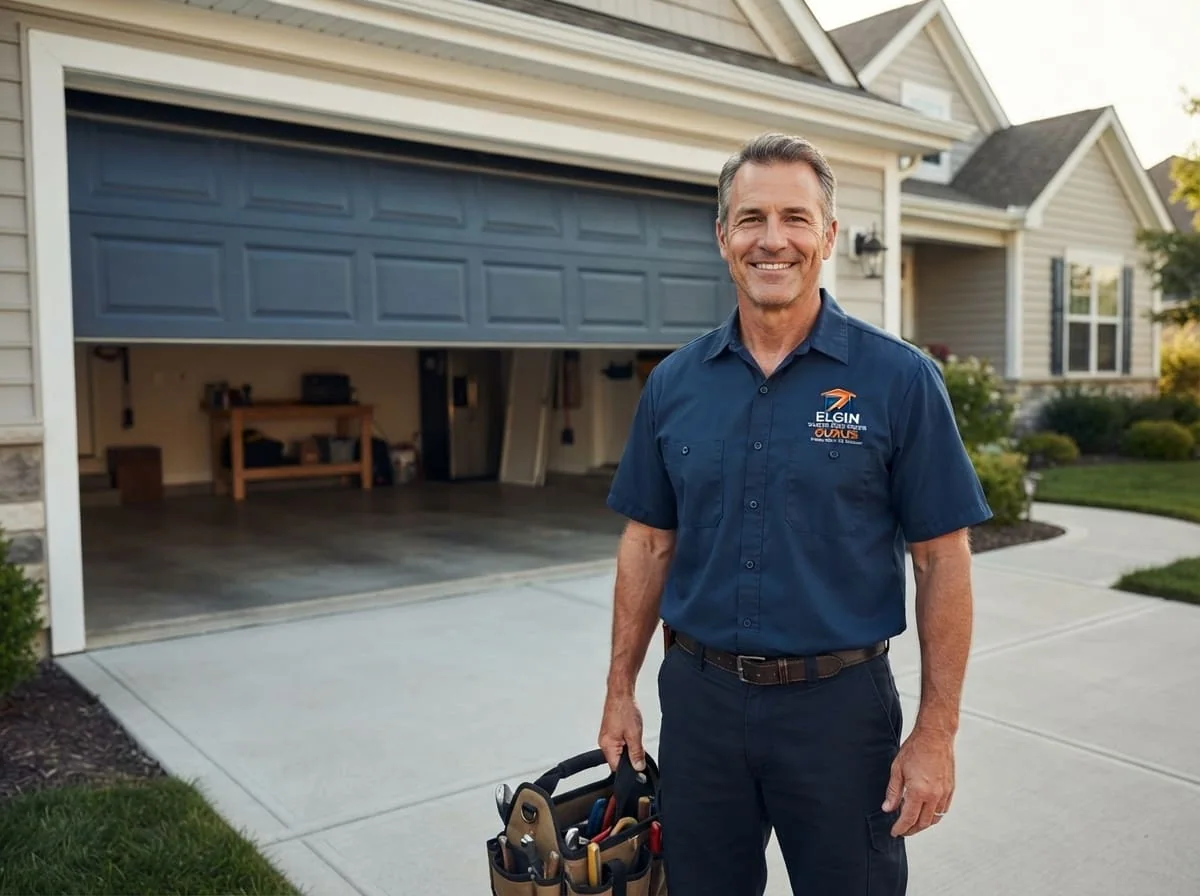
A garage door works differently depending on the house it's attached to, and Elgin has a lot of different houses. The Elgin Historic District and the Watch Factory District are full of older homes with narrower, single-car garages and doors that have been repaired and re-repaired over decades. Newer developments off Randall Road, like Bowes Creek and Highland Woods, tend to have wider two-car doors, insulated steel panels, and openers with rolling-code safety features built in from the factory. Both kinds of homes end up needing the same kind of help eventually — a torsion spring that's lost tension, a track that's drifted out of alignment, an opener that's stopped talking to its sensors.
Residential work is what most of our calls in Elgin, South Elgin, Bartlett, Streamwood, Carpentersville, St. Charles, Hoffman Estates, West Dundee, Sleepy Hollow, and Gilberts are about. Homeowners aren't usually thinking about their garage door until it stops behaving — until it's noisy at 6 a.m. before a commute, until it won't seal against a January wind, until a sensor throws an error right as the kids are trying to get out the door for school. Those are the moments this page is for.
Elgin Garage Door Repair Gurus was built specifically around that kind of call. Marcus Reyes spent years working residential routes for a large national chain before starting this company in 2017, and the thing that pushed him out was watching techs get pressured to sell full replacements to homeowners — especially older ones — for problems that were actually small, fixable parts. Every residential visit here starts with a real diagnosis of what's wrong before anyone talks about what it costs to fix it.
The Range of Residential Work We Handle
Residential calls cover a wide spread of jobs, and most homes need more than one of them over the years they own a door:
- Broken or weakening torsion and extension spring replacement
- Opener repair and full opener installation, including safety sensor alignment
- Cable, roller, and track repair for doors that are noisy, off-track, or dragging
- Panel replacement for dented, cracked, or storm-damaged sections
- New garage door installation, including insulated options for better winter performance
- General tune-ups — lubrication, hardware tightening, balance checks — for doors that are still working but starting to show their age
The right fix depends on the door's age, its spring type, and how it's been maintained, not just the symptom a homeowner is hearing or seeing. That's why every residential call starts with a hands-on look at the whole system, not just a quote for the part that seems obviously broken.
What Elgin Homeowners Usually Call About
A few concerns come up over and over on residential visits, whether the home is a Craftsman cottage near downtown or a two-story build in Highland Woods:
- Winter performance. An uninsulated or poorly sealed door lets a lot of cold air into an attached garage, which matters if the garage shares a wall with living space or if the homeowner uses it as a workshop.
- Curb appeal. The garage door is one of the largest visible surfaces on most house fronts, and a dented, faded, or mismatched door stands out — especially in neighborhoods where homeowners are keeping an eye on resale value.
- Safety around kids and pets. Parents want to know their door's safety reversal sensors are actually working, not just that the door goes up and down.
- Daily reliability. A door that hesitates, grinds, or occasionally doesn't respond to the opener is more than an annoyance when it's the way someone leaves for work every morning.
None of these are exotic problems. They're the ordinary wear-and-tear issues that come with owning a door that gets used, on average, several times a day for years.
How Elgin Winters Wear on Residential Doors
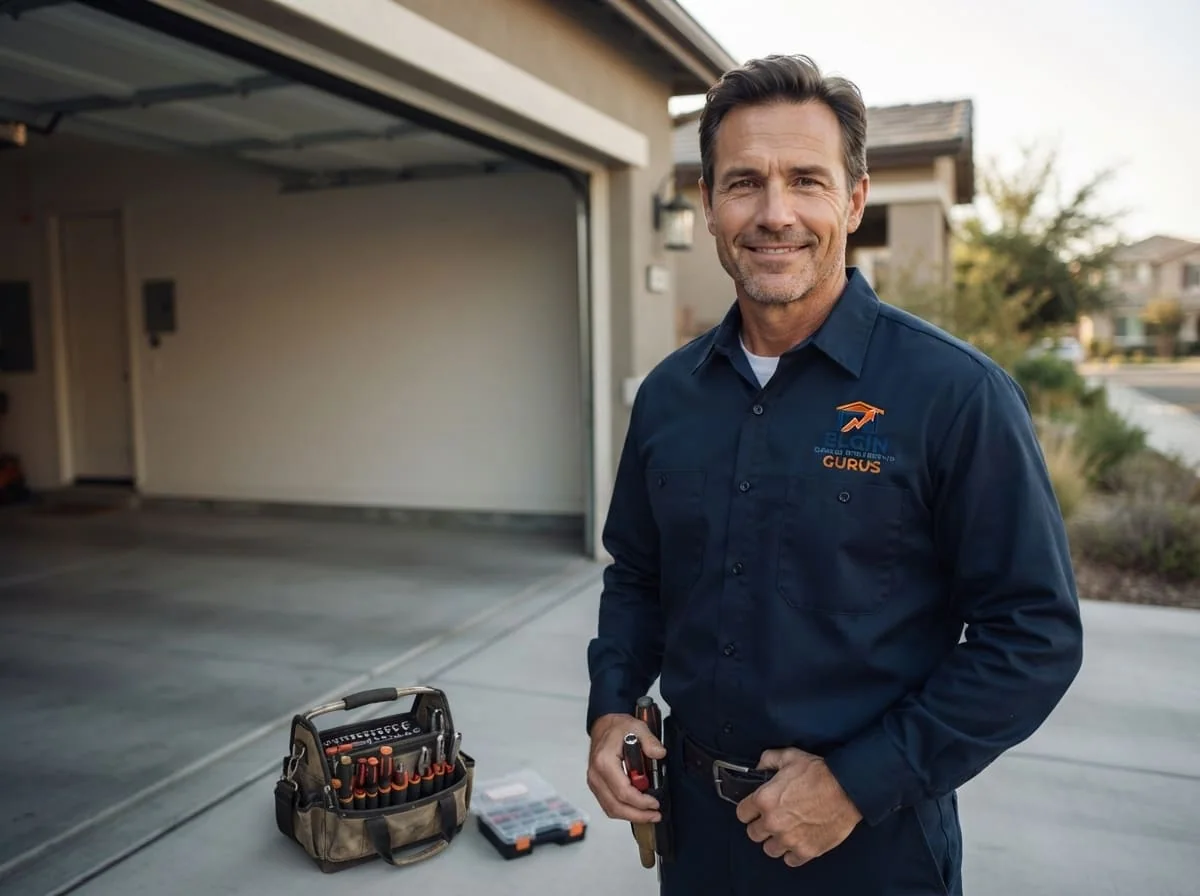
Elgin sits in a humid continental climate with real winter cold — January highs average around 30°F with lows near 15°F, plus genuine snow load most years. That affects garage doors in specific, mechanical ways. Torsion springs contract in cold temperatures and lose some tension, which is part of why more springs snap in winter than any other season. Metal door tracks contract too, which can cause binding if they weren't perfectly aligned to begin with. Nylon rollers get brittle and noisier in the cold, and opener lubricant thickens, which can make the motor strain more than it should on a cold start.
Freeze-thaw cycles are the other piece. As the concrete slab under a garage floor shifts slightly through repeated freezing and thawing, it can throw off track alignment over several seasons — usually showing up as a door that used to run quietly and now doesn't. None of this means every residential door needs winter-specific work every year, but it's worth a homeowner knowing why problems seem to cluster in the colder months.
Why DIY Residential Repairs Carry Real Risk
Torsion springs store a significant amount of mechanical tension, and that tension doesn't go away just because the door looks still. Adjusting or replacing a spring without the right tools and technique is one of the more common ways people get seriously hurt working on their own garage. Extension springs carry a different risk profile and need proper safety containment cables, per CPSC guidance, to keep a broken spring from becoming a projectile.
Beyond springs, misjudging cable tension, opener wiring, or track alignment can leave a door that looks fixed but fails unpredictably later — which is a worse outcome in a home with kids or pets moving through the garage regularly. Simple maintenance like lubricating hinges or clearing track debris is reasonable for a homeowner to do; spring, cable, and structural track work generally isn't.
How We Handle a Residential Service Call
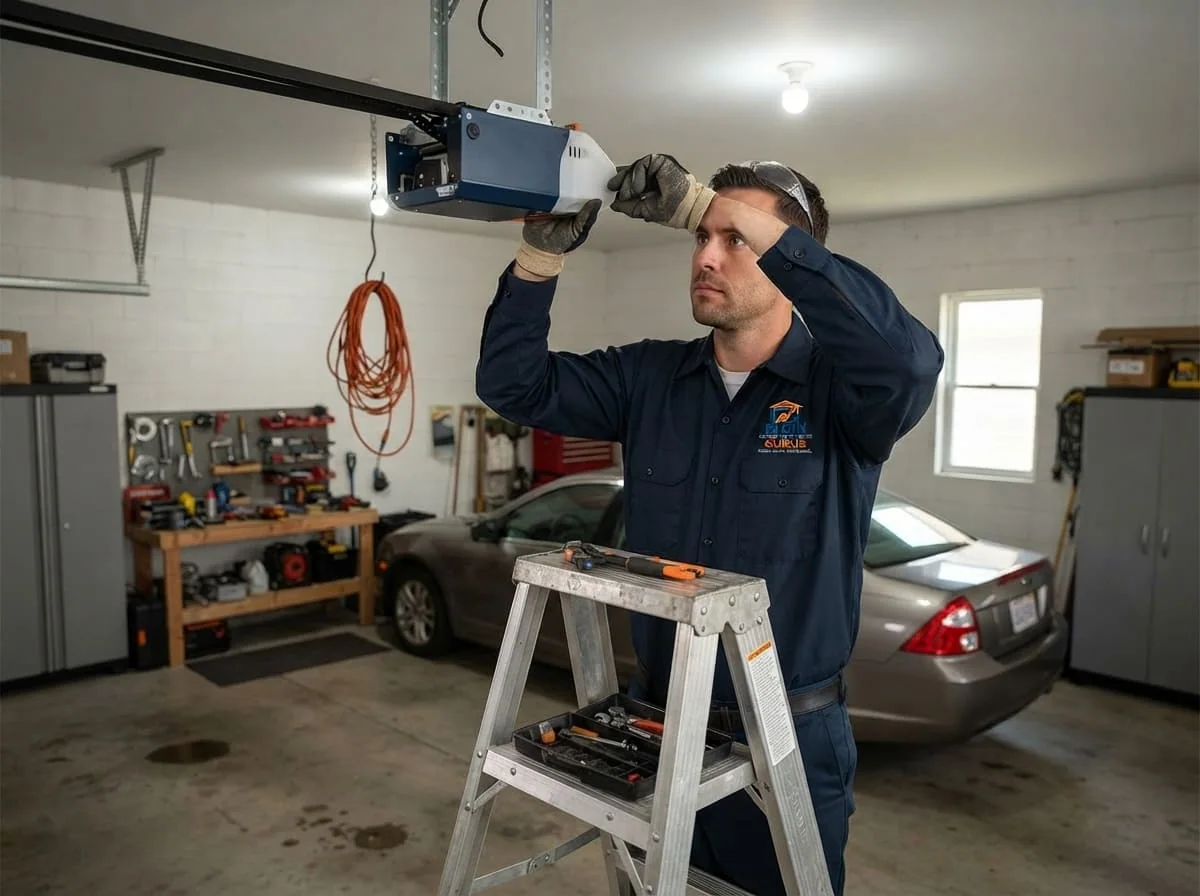
Every residential visit starts the same way: a technician looks at the actual door before saying what it needs. That habit comes directly from how Marcus Reyes built this company. After years of watching a big national chain push techs to quote full door or opener replacements for problems that were really a single worn part, he started Elgin Garage Door Repair Gurus in 2017 specifically to do it the other way — diagnose first, explain what's actually wrong in plain terms, and quote honestly before any work begins.
That approach doesn't change based on the neighborhood or the age of the house. A homeowner in the Elgin Historic District gets the same explanation of what's broken and why as a homeowner in Bowes Creek. We treat every customer as capable of understanding their own door, because they are — they just haven't had many companies willing to explain it to them straight.
Residential vs. Commercial: Why the Approach Differs
Residential and commercial garage doors aren't the same job wearing a different sign. A residential sectional door typically runs on lighter torsion springs sized for a single- or two-car opening, cycles a handful of times a day, and is judged as much on curb appeal as function. Commercial doors are often larger, cycle far more often, and get evaluated primarily on uptime and durability for a business that depends on them. We work on both, but the priorities are different — for a look at how we approach doors on the business side, see our commercial garage door services.
What to Expect When You Call
Call or request an appointment
Tell us what the door is doing — noisy, off-track, won't open, or anything else — so we can bring the right parts on the first visit.
On-site diagnosis
A technician inspects the springs, cables, tracks, rollers, and opener to identify the actual cause, not just the symptom.
Honest, upfront explanation
We walk through what's wrong in plain terms and provide a clear quote before any repair or installation work begins.
Repair or installation
Work is completed on the agreed scope, with attention to proper spring tension, track alignment, and opener safety sensor function.
Final safety check
Before we leave, we test the door's balance and reversal sensors so it's confirmed safe for daily use around kids and pets.
Residential Garage Doors in Elgin, IL FAQs
How much does it cost to repair or replace a residential garage door?
Cost depends on factors like spring type, door size and material, insulation level, and whether the opener needs work too. We don't quote numbers sight unseen — every residential visit includes a free, upfront quote after a technician actually looks at the door.
Can I replace my own garage door spring?
We don't recommend it. Torsion springs hold significant stored tension and improper handling is a leading cause of serious injury in DIY garage door work. Basic maintenance like lubrication is fine to do yourself; spring and cable work isn't.
How long does a residential garage door installation take?
A single-door installation is typically completed in one visit, though timing depends on whether the opening needs modification or the opener is being replaced at the same time. We'll give you a specific estimate for your situation before starting.
Is my garage door actually safe with kids and pets around it?
Most modern openers include safety reversal sensors that stop and reverse the door if something is in its path, but those sensors need to be properly aligned and tested to work. If you're not sure yours are functioning, it's worth having them checked.
What's the best garage door option for Illinois winters?
Insulated steel doors generally perform best against Elgin's cold winters, especially for attached garages sharing a wall with living space. The right R-value and weatherstripping setup depends on your garage's use and the door's construction.
How often should a residential garage door be serviced?
An annual check of spring tension, track alignment, hardware, and opener sensors catches most problems before they turn into a broken spring or a stuck door, especially heading into winter.
Do I need a permit to replace a garage door in Elgin?
Swapping an existing door or opener on an existing garage typically doesn't require a separate permit, but rules can vary if structural framing changes. Check with the City of Elgin's Building Division for your specific situation before starting work.
Need Residential Garage Doors in Elgin, IL?
Elgin Garage Door Repair Gurus is ready to help — call now for a free, upfront quote.