
Garage Door Opener Installation in Elgin, IL
Whether it's a brand-new garage that's never had an opener or an old motor that finally gave out, we mount, wire, and calibrate the right opener for your door, then test every safety feature before we leave.
- Locally owned since 2017
- Insured, background-checked techs
- Free upfront quotes
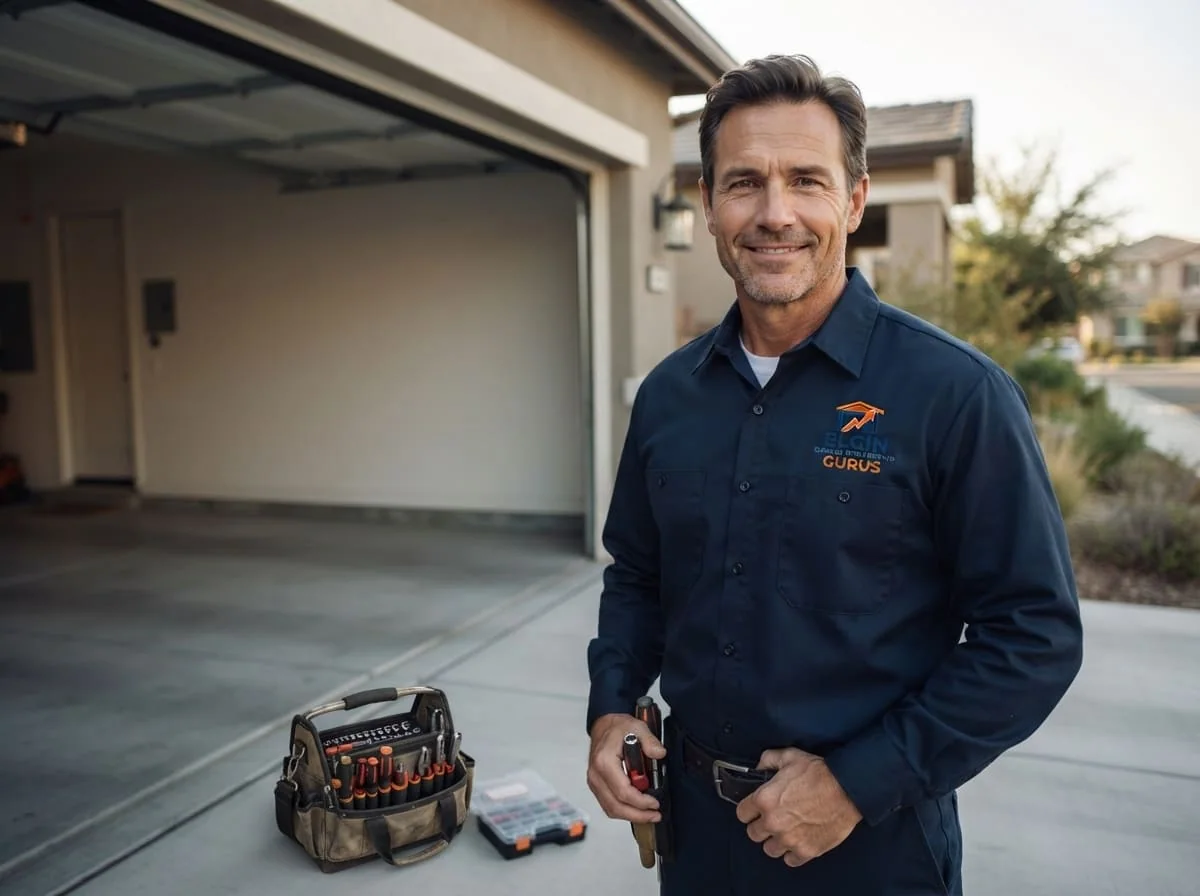
A garage door opener is a lift mechanism, a set of safety systems, and a piece of home security equipment all mounted to the same bracket. Getting the installation right means more than bolting a motor to the ceiling. It means matching the drive type to your door and garage layout, wiring the safety sensors correctly, and setting travel limits and force settings so the door reverses instead of continuing to close on something in its path.
We install new openers for two very different situations: a garage that's being built or finished out and never had one, and an existing opener that's failed or is on its way out after years of grinding gears, dead logic boards, or a motor that hums but won't lift the door. Both jobs get the same attention to mounting, wiring, and safety testing regardless of why the opener is new.
Elgin's older housing stock adds a wrinkle some newer suburbs don't have. Garages in the Historic District and the Watch Factory District were often built or expanded well before automatic openers existed, so header framing sometimes needs reinforcement before a motor unit can be mounted securely. We check that during the initial assessment, not after the bracket is already up.
Signs It's Time for a New Opener
Some openers fail all at once. Others send warning signs for weeks before they quit for good. Common reasons homeowners call us for a new installation instead of a repair include:
- The motor runs but the door doesn't move, or the drive gear has stripped and needs replacing along with the unit
- A grinding, burning, or electrical smell coming from the motor housing
- Remotes and keypads stop responding even after fresh batteries and reprogramming
- The opener is well past its typical service life and repairs have become frequent
- A new-construction or newly finished garage that has never had an automatic opener installed
If the issue turns out to be a loose sprocket, a worn sensor, or a simple wiring fault, that's a repair, not a replacement, and we'll tell you which one you actually need before any work starts.
Choosing an Opener Type: Chain, Belt, or Wall-Mount
The drive mechanism affects noise, maintenance, and how much ceiling clearance the installation needs. We walk through the tradeoffs on-site based on your door weight, garage layout, and what's above the garage.
- Chain-drive openers use a metal chain to pull the trolley along the rail. They're a durable, straightforward option and tend to suit detached garages or spaces where noise isn't a major concern.
- Belt-drive openers use a reinforced belt instead of a chain, which runs noticeably quieter. That matters most for attached garages, especially with a bedroom or living space directly above or beside it.
- Wall-mount (jackshaft-style) openers install beside the door rather than overhead, freeing up the entire ceiling for storage, a lift, or a vaulted ceiling with no room for a rail.
We wrote a longer comparison of chain, belt, and wall-mount openers if you want to weigh the differences before we arrive.
What a Professional Installation Includes
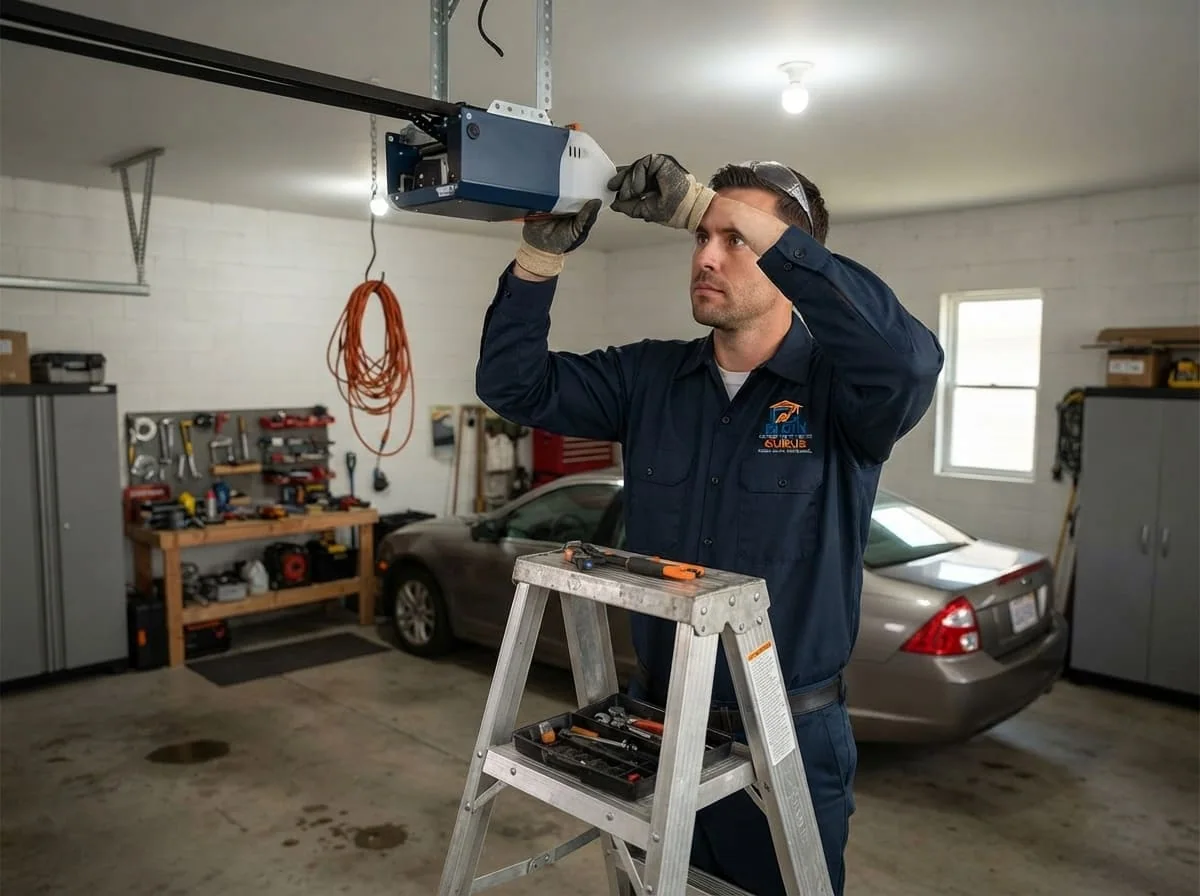
An opener installation touches more than the motor itself. On a typical job we:
- Confirm the header framing above the door can support the mounting bracket, reinforcing it first if needed
- Mount the rail and motor unit, then wire in the wall control station and safety sensors
- Set travel limits and lift force to match your specific door's weight and balance
- Test auto-reverse and safety sensor response before programming anything else
- Program remotes, keypads, and any connected vehicle or smart-home controls
- Confirm the manual release cord disengages the trolley correctly in case of a power outage
Force settings matter more than most homeowners expect. Too loose and the door won't seal or lock properly; too tight and it won't reverse off an obstruction the way it's supposed to.
Safety Sensor Setup and Testing
Federal safety requirements have called for entrapment-protection sensors on residential opener installations for decades, and getting that part right is not optional. The photo-eye sensors mount low, roughly six inches or less above the floor on each side of the track, aimed so a broken beam signals the opener to stop and reverse rather than keep closing.
On every installation we align the sensors, secure the wiring so lawn equipment or foot traffic can't knock them loose, and then physically test the reversal by breaking the beam with an object partway through the closing cycle. We also test that the door reverses off a physical obstruction using the force-sensing setting, not just the sensors. Both systems are meant to work together, and a new installation isn't finished until we've confirmed both actually do.
The U.S. Consumer Product Safety Commission has published guidance on entrapment hazards for exactly this reason. If your existing sensors were ever knocked out of alignment by a ladder, a parked bike, or driveway resealing, that's worth mentioning when you book, since we'll check it either way.
Why a DIY Opener Kit Is a Real Risk
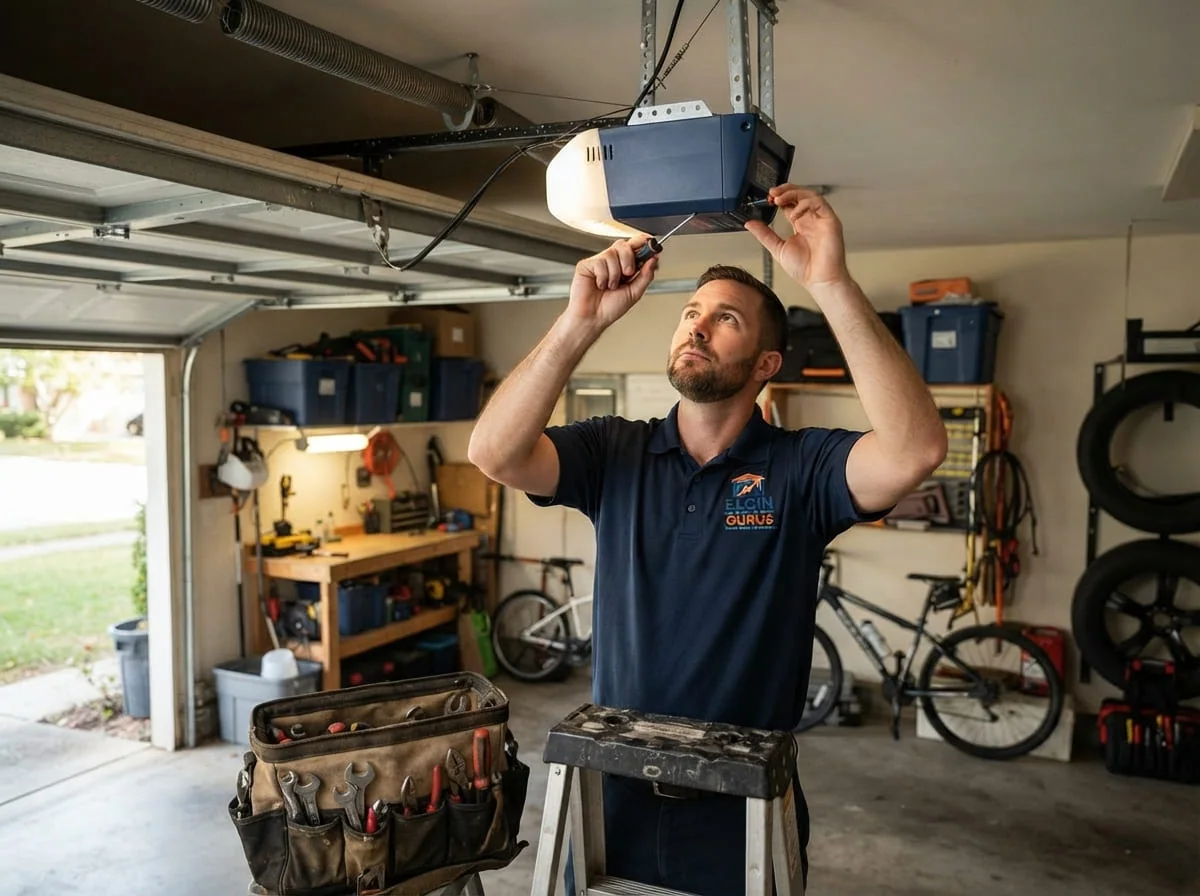
Opener kits are sold as a weekend project, and the motor unit itself is genuinely not hard to bolt together. The risk shows up in the details that don't come with clear instructions for an average homeowner:
- Mounting the header bracket into framing that can actually hold the pull force of a lifting door, rather than into drywall or a rafter that isn't rated for it
- Wiring gauge and circuit requirements for the motor and safety sensors
- Setting force limits correctly, since too high a setting can mean the door keeps closing on a pet, a bike, or a person instead of reversing
- Aligning safety sensors precisely enough that they trigger reliably, not just when tested once at installation
A misaligned sensor or an over-tightened force setting can look completely fine in daily use and only fail at the one moment it actually matters. That's the part a self-installed kit can't guarantee the way a technician who tests it on-site can.
New Construction and Older Elgin Garages
New-construction and newly finished garages need a first-time installation with no old bracket or wiring to work around, which usually makes for a faster job once the opener type and mounting point are decided. We see this often in newer westside developments and in garages finished out after the fact in older neighborhoods.
On the other end, some of Elgin's older garages near downtown and in the Historic District were built well before automatic openers were standard, so the header framing sometimes needs reinforcing before a mounting bracket goes up safely. Door-and-opener swaps on an existing garage typically don't require a separate city permit, but requirements can vary by project, so it's worth a quick check with the City of Elgin's residential permit guidance if your project also involves structural changes.
Kane County's winters are also a practical factor. Cold thickens opener lubricant and can slow the logic board's response slightly in an unheated garage, so we account for that when setting travel limits and force settings rather than calibrating only for a mild-weather day.
Why Elgin Homeowners Choose Us for Opener Installation
Owner and lead technician Marcus Reyes started this company after years of watching a sales-quota culture push unnecessary opener upgrades on customers who didn't need them. That's not how we quote a job here. If your current opener is repairable, we'll say so; if it genuinely needs replacing, we'll walk you through the drive types and let you decide, without pressure toward the most expensive option.
We've been serving Elgin and the surrounding suburbs since 2017, our technicians are background-checked and insured, and every opener installation includes upfront, honest pricing before any work begins, along with the safety sensor and force testing described above as a standard part of the job, not an upsell.
What to Expect When You Call
On-Site Assessment
We inspect your door's weight, headroom, and mounting point, then recommend a chain, belt, or wall-mount opener suited to your garage.
Mounting and Wiring
We install the header bracket, rail, motor unit, wall control station, and safety sensor wiring, reinforcing framing first if the garage needs it.
Calibration and Safety Testing
We set travel limits and force settings for your specific door, then physically test auto-reverse and safety sensor response before moving on.
Programming and Walkthrough
We program your remotes and keypad, confirm the manual release cord works, and walk through daily operation before we leave.
Garage Door Opener Installation in Elgin, IL FAQs
How long does a garage door opener installation take?
Most installations are finished within a few hours in a single visit, including safety sensor testing and remote programming. Older garages that need header reinforcement can take longer.
Can I install a garage door opener myself with a kit?
You can, but the risk isn't the motor itself, it's the mounting strength, wiring, and safety sensor alignment, all of which need to be correct for the safety systems to actually work. A misaligned sensor can pass a casual test and still fail when it matters.
What's the difference between chain, belt, and wall-mount openers?
Chain-drive openers are durable and straightforward, belt-drive openers run quieter and suit garages near living space, and wall-mount openers install beside the door instead of overhead, freeing up ceiling space entirely.
Do I need a permit to install a new garage door opener in Elgin?
A straightforward opener swap or new install on an existing garage typically doesn't require a separate city permit, but this can vary if structural framing work is involved, so it's worth confirming with the City of Elgin's Building Division for your specific project.
Why does my new opener need to be tested with safety sensors?
Federal safety guidelines have required entrapment-protection sensors on residential openers for decades because a door that doesn't reverse off an obstruction is a genuine hazard. We test the sensors and the force-reversal setting separately before considering an installation complete.
How much does opener installation cost?
Cost depends on the drive type you choose, your garage's mounting conditions, and whether any framing reinforcement is needed. We provide a free, upfront quote before any work begins rather than pricing over the phone.
Is my old opener worth repairing instead of replacing?
Often, yes. A dead logic board, a worn sprocket, or a wiring fault is usually a repair, not a reason to replace the whole unit. We diagnose first and only recommend a new installation when the existing opener genuinely isn't worth fixing.
Need Garage Door Opener Installation in Elgin, IL?
Elgin Garage Door Repair Gurus is ready to help — call now for a free, upfront quote.