
Garage Door Opener Repair in Elgin, IL
From a remote that won't respond to a door that reverses the instant it touches the floor, we find the actual cause before we ever talk about a fix.
- Locally owned since 2017
- Insured, background-checked techs
- Free upfront quotes
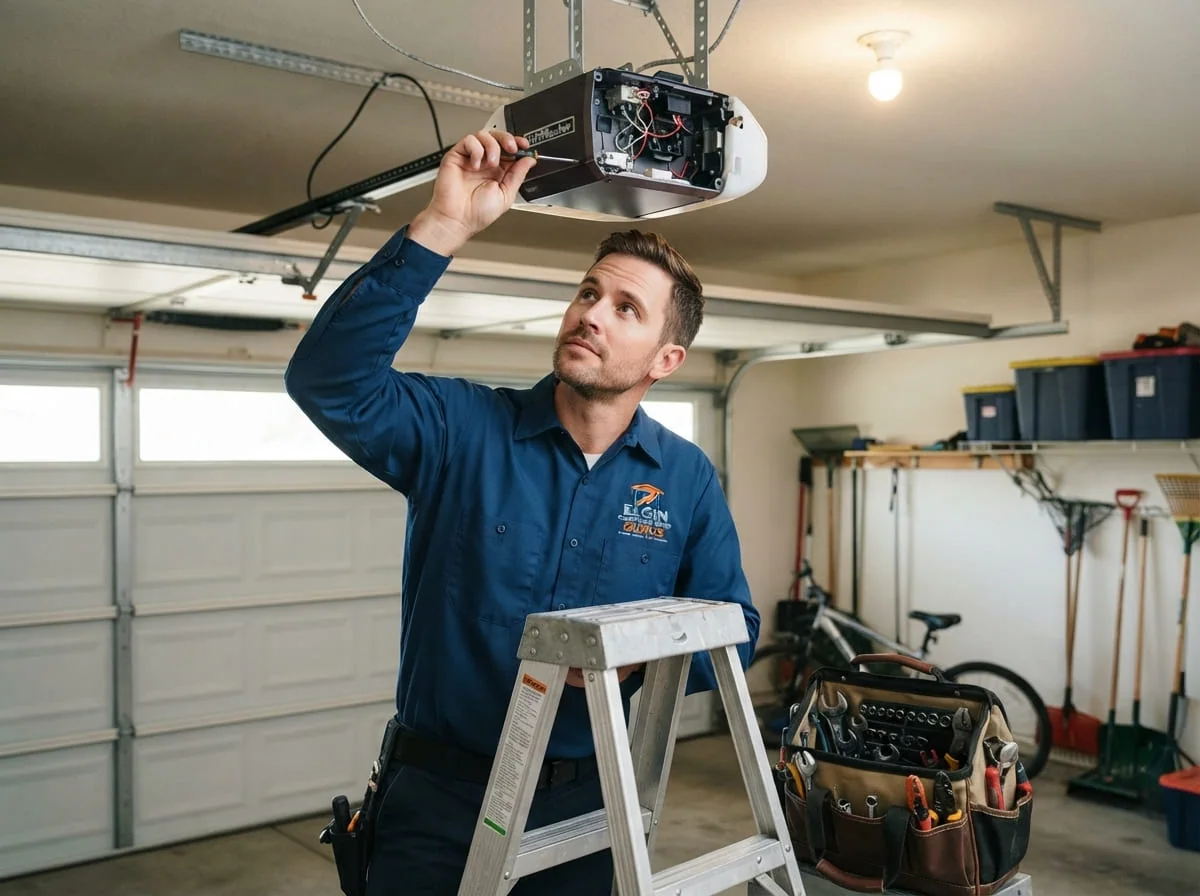
A garage door opener that won't respond, reverses for no reason, or grinds instead of lifting is rarely a mystery once someone knows where to look. Most opener failures trace back to one of a handful of components: the logic board, the drive mechanism, the safety sensors mounted low on each track, or the remote and wall keypad that talk to the unit. Guessing at which one is the culprit is how homeowners end up replacing perfectly good hardware.
Elgin Garage Door Repair Gurus diagnoses openers before recommending anything. That means testing the logic board and wiring, checking travel and force settings, inspecting the drive mechanism for wear, and confirming the safety sensors are aligned and unobstructed, all before deciding whether a repair or a full opener replacement actually makes sense. A lot of calls that start with "I think I need a new opener" end with a fifteen-minute sensor realignment or a worn drive gear swap.
Kane County's temperature swings add a real variable here. Cold snaps thicken lubricant and contract metal trim and mounting brackets, which can turn a marginal opener issue into a dead stop overnight, especially heading into January and February. We see the pattern every winter across Elgin, South Elgin, Bartlett, and the surrounding suburbs we serve.
Common Signs Your Opener Needs Attention
Opener problems usually show up as one of a few recognizable patterns. Knowing which one you're dealing with helps on the phone when we're scheduling a visit, and it can rule out a full opener swap before a technician even arrives.
- No response at all — the remote, wall button, or both do nothing when pressed, which usually points to power, wiring, or a dead logic board rather than the door itself.
- Door reverses immediately — it starts down and instantly reverses back up before touching the floor, almost always a safety sensor or force-setting issue, not a broken door.
- Grinding or clicking with no movement — the motor runs but the door doesn't budge, which usually means a stripped gear, a slipping belt, or a disengaged trolley.
- Remote works inconsistently — one remote works and another doesn't, or range has shrunk to a few feet, often a dying battery, a frequency conflict, or a keypad in need of reprogramming.
- Blinking sensor lights or a door that won't close from the remote but will from the wall button — a strong sign the safety sensors are misaligned, dirty, or obstructed.
Any of these is worth a call rather than repeated troubleshooting, since some of these symptoms (especially reversal and grinding) can mask a spring or cable problem that has nothing to do with the opener itself.
How We Diagnose the Real Problem
Opener diagnostics follow a set order, because skipping steps is how people end up replacing a unit that only needed a sensor cleaned. A technician typically checks, in sequence: power at the outlet and any tripped breaker or GFCI, the wall button versus the remote separately (to isolate a wiring issue from a remote issue), the safety sensor alignment and lens condition on both sides of the track, the travel limit and force settings against the door's actual weight and balance, and the drive mechanism itself for stripped gears, a worn belt, or a chain that's jumped its sprocket.
That last check matters more than people expect. An opener fighting against a door that's out of balance, or one that's binding on a bent track, will burn out its drive components early even if the opener itself was installed correctly. Diagnosing the opener in isolation, without checking the door it's lifting, is how a repair gets misdiagnosed as an opener failure when the door mechanics are the actual root cause.
When Repair Makes More Sense Than Replacement
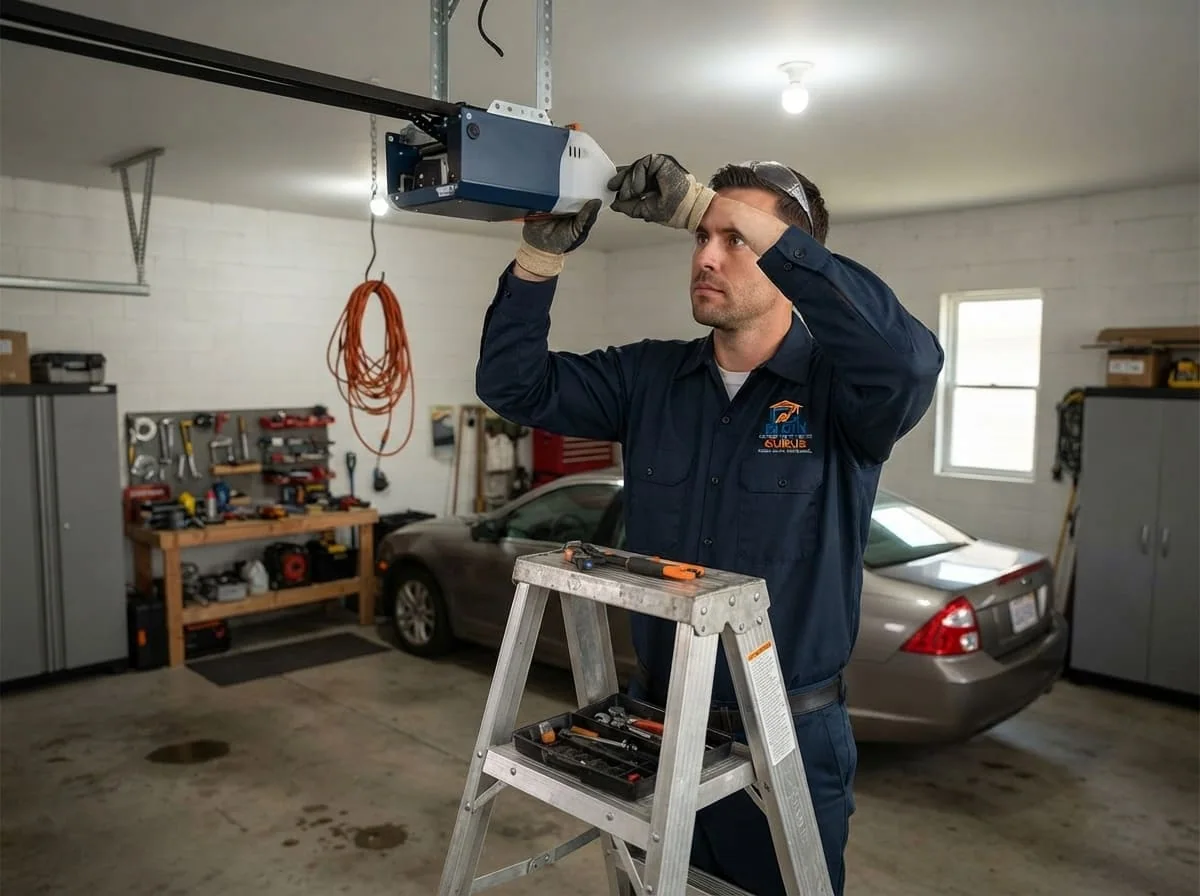
Not every opener problem justifies a new unit, and not every opener is worth repairing indefinitely either. Logic board faults, sensor misalignment, a stripped drive gear, or a failing remote or keypad on an otherwise sound opener are typically straightforward repairs on a unit that still has plenty of service life left.
Replacement starts to make more sense when the motor itself has burned out, when the opener is old enough that replacement parts are hard to source, or when a homeowner is already dealing with repeat issues on the same unit within a short span. We walk through both options honestly and explain what we found before recommending either one, with upfront pricing before any work starts. If you're weighing chain-drive, belt-drive, and wall-mount options for a full replacement, our comparison of opener drive types covers the tradeoffs in noise, maintenance, and mounting requirements.
Why DIY Opener Troubleshooting Gets Risky
An opener is wired into a door held under real spring tension, and that combination is less forgiving than it looks. Adjusting force settings without understanding what they control can mask a dangerous imbalance instead of fixing it. Working near the sensors and header wiring without cutting power first risks a shock or a pinch injury from an unexpectedly moving door.
The safety sensors deserve particular respect. They exist specifically to stop a door from closing on a person, pet, or object, and a door that only closes after someone bypasses or disconnects a sensor is a door that's had its main safety feature disabled, not fixed. Our guide to troubleshooting safety sensors covers the checks that are safe to do yourself, like clearing debris and checking alignment, versus the ones that call for a technician.
Elgin's Weather and Opener Performance
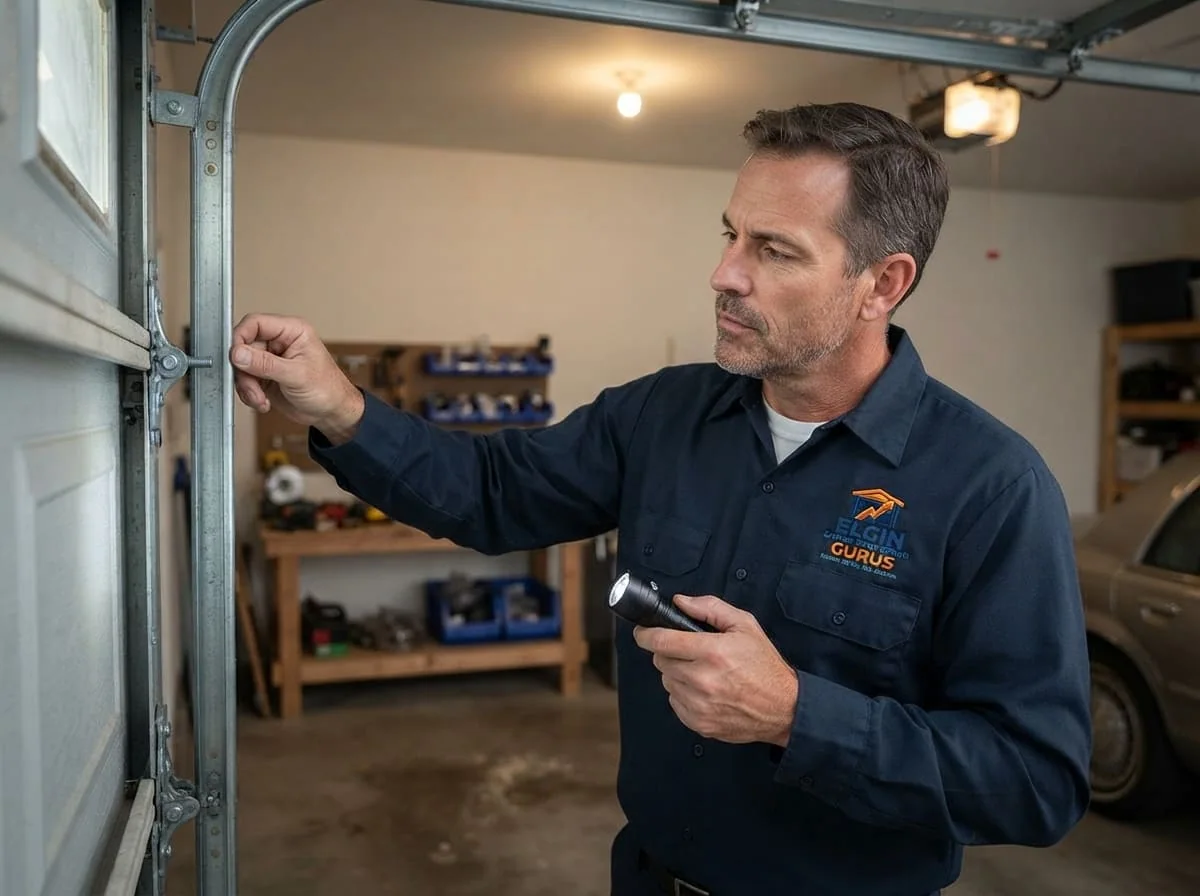
Kane County winters bring real cold, with January highs typically near 30°F and lows near 15°F, and that cold affects openers as much as it affects springs and tracks. Lubricant inside the drive mechanism thickens, motors work harder to overcome added friction, and metal mounting brackets and rail sections contract slightly, which can throw off alignment that was fine in July. Humid summers cut the other way, with moisture and temperature swings gradually affecting circuit boards and wiring connections over years of use.
None of that means an opener needs replacing every season. It does mean seasonal symptoms, an opener that struggled through December and seems fine by April, are worth mentioning when you call, since they help narrow down whether the issue is mechanical wear or something temperature-related that a simple adjustment resolves.
Why Elgin Homeowners Call Us for Opener Repair
Elgin Garage Door Repair Gurus has been diagnosing and repairing garage door openers across Elgin and the surrounding suburbs since 2017. Our approach is straightforward: diagnose the actual problem, explain it in plain language, and quote the repair honestly before any work begins, rather than defaulting to a full opener replacement because it's a bigger ticket. That's the same philosophy the company was founded on, and it's still how every service call is handled today.
Technicians are background-checked and insured, and we offer same-day appointments where possible for opener problems that leave a door stuck open or unable to close securely. Whether you're near downtown Elgin or out toward Bartlett, we bring the diagnostic tools and parts needed to resolve most opener issues in a single visit.
What to Expect When You Call
Describe the symptoms
We ask what the opener is doing (or not doing) so we can bring the right parts and tools for the likely cause.
On-site diagnostic check
A technician tests the logic board, sensors, wiring, and drive mechanism to confirm the actual source of the problem.
Upfront repair quote
You get a clear explanation of what's wrong and an honest price before any repair work starts.
Repair and adjustment
Most opener repairs, from sensor realignment to drive gear replacement, are completed in the same visit.
Test and walkthrough
We run the door through several full cycles and walk you through how the fix holds up before we leave.
Garage Door Opener Repair in Elgin, IL FAQs
Why won't my garage door opener respond to the remote or wall button?
This usually points to a power issue, a wiring fault, or a failed logic board rather than the door itself. A dead remote battery or a tripped breaker are the simplest causes and worth checking first.
Why does my garage door reverse right after it starts closing?
Immediate reversal is almost always caused by the safety sensors, either misaligned, dirty, or obstructed, or by a force setting that's too sensitive for the door's current weight and balance. It's rarely a sign the opener itself is failing.
Is a grinding noise from the opener a sign of a bigger problem?
Grinding with little or no door movement usually means a stripped drive gear, a slipping belt, or a chain that's jumped its sprocket. It's worth having looked at before it wears further, since a failing drive mechanism tends to get worse quickly under continued use.
Can I fix garage door opener issues myself?
Some checks are safe to do yourself, like cleaning sensor lenses, checking alignment, and replacing remote batteries. Anything involving force settings, wiring, or work near the header while the door is under tension is safer left to a technician.
How do I know if my safety sensors are misaligned?
Blinking indicator lights on one or both sensors, or a door that closes from the wall button but not the remote, are common signs. Alignment can shift from a bump, a loose mounting bracket, or seasonal temperature changes affecting the track.
How much does garage door opener repair cost?
It depends on which component has failed, whether parts need replacing, and how the drive mechanism and sensors test out during diagnosis. We provide a free, upfront quote after inspecting the opener so there are no surprises before work begins.
Should I repair my opener or replace it entirely?
Sensor, logic board, and remote issues on an otherwise sound opener are usually straightforward repairs. A burned-out motor or an older unit with repeat failures often makes replacement the more practical long-term choice, and we'll walk through both options honestly.
Need Garage Door Opener Repair in Elgin, IL?
Elgin Garage Door Repair Gurus is ready to help — call now for a free, upfront quote.