
Garage Door Track Repair in Elgin, IL
A door that grinds, sticks, or won't sit flush usually isn't broken - its tracks are bent or out of alignment. We straighten, realign, or replace tracks so your door runs true again.
- Locally owned since 2017
- Insured, background-checked techs
- Free upfront quotes
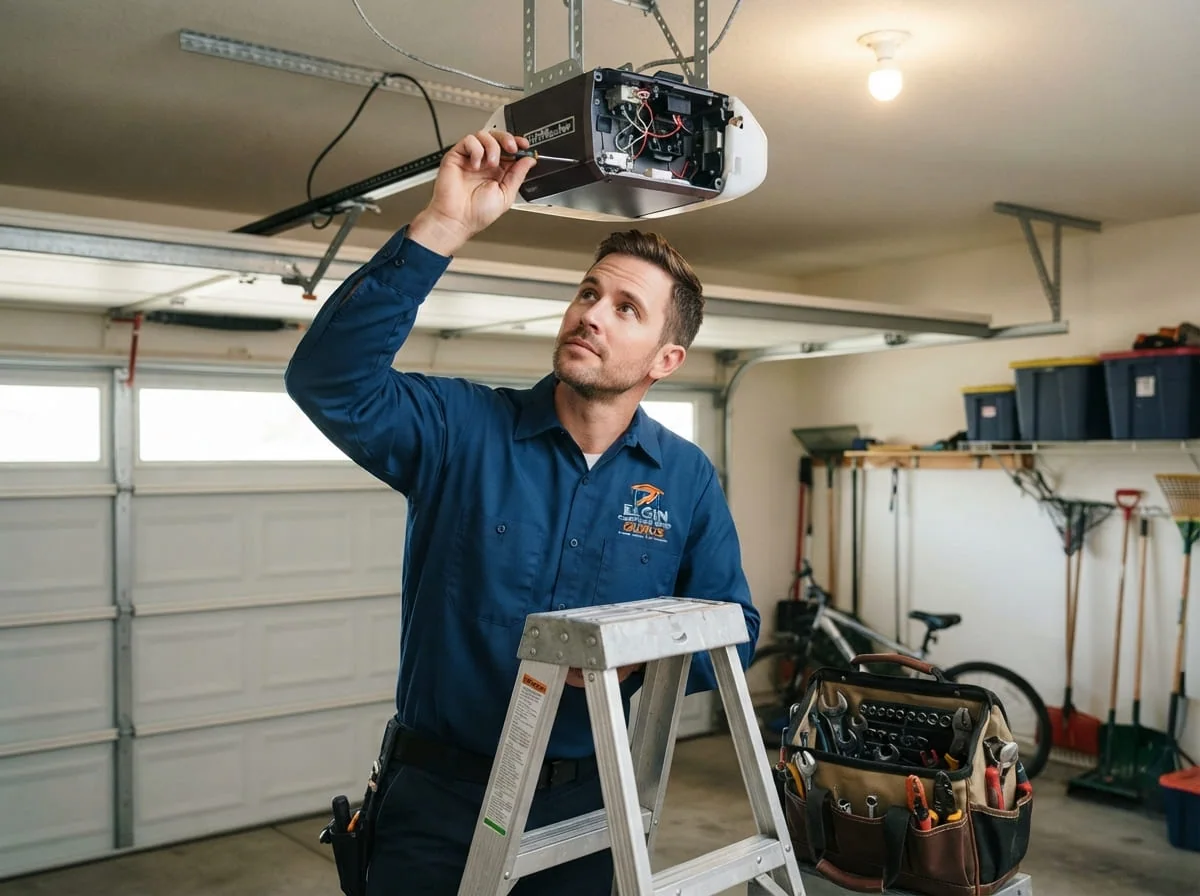
The vertical and horizontal tracks that guide your garage door look like simple steel channels, but they carry the entire weight of the door as it travels and hold it to a precise, straight path. When a track gets bent, dented, or pulled loose from the wall, that path stops being straight, and everything downstream - rollers, hinges, cables, the opener - starts fighting the misalignment instead of working with it.
Homeowners in Elgin usually notice track trouble as a symptom somewhere else: a door that rattles harder than it used to, a panel that rubs against the frame on one side, or an opener that strains and reverses partway through a cycle. The track itself is easy to overlook because it's mounted along the inside walls of the garage, out of the sightline most people use when they glance at a door problem.
Elgin Garage Door Repair Gurus has been diagnosing and fixing track issues across Elgin and the surrounding Kane and Cook County suburbs since 2017. We inspect the whole system before touching anything, so a track repair stays a track repair and doesn't turn into an unnecessary replacement.
Signs Your Garage Door Track Is Bent or Misaligned
Track damage rarely announces itself outright. It shows up as a cluster of smaller symptoms that build over weeks or months as the bend gets worse or a roller wears unevenly against it.
- The door travels unevenly - one side seems to lead or lag the other during a cycle
- A visible gap opens between a roller and the track, or the roller looks like it's riding on the edge of the rail instead of inside it
- Grinding, scraping, or a rhythmic clunk that lines up with a specific point in the door's travel, not the whole cycle
- The door reverses on its own partway through closing, as if something is blocking it
- A section of track has an obvious kink, dent, or gap where it pulls away from the wall bracket
- The door binds or feels tight in one spot but moves freely everywhere else
Any one of these on its own can point to a roller or spring issue instead. Seeing two or three together, especially a localized grind plus a visible gap at the same spot, is a strong signal the track itself is out of true.
Why a Bent Track Often Looks Like a Door Problem
Most homeowners assume a door that won't close right, sags on one side, or fights the opener has something wrong with the door panels or the opener unit itself. Track damage is easy to miss as the actual cause because the track is bolted along the garage walls and ceiling, not on the door, so it isn't the first thing anyone looks at.
But the track is what everything else references. Rollers ride in it, the door's edges follow its curve into the horizontal run, and the opener's travel limits assume the door is moving along a consistent path. Bend the track even slightly and the door has to twist or fight its way through that section on every cycle. That extra stress gets misread as a weak opener, a failing spring, or a door that's simply wearing out, when in fact the track is forcing the door to work against itself.
This is also why replacing rollers or adjusting the opener sometimes only masks the symptom for a short while. New rollers still have to travel through the same bent section, and they'll start showing the same wear pattern again. Fixing the track first is usually what actually resolves the underlying issue, which is why an accurate diagnosis matters more than jumping straight to whichever part looks most worn.
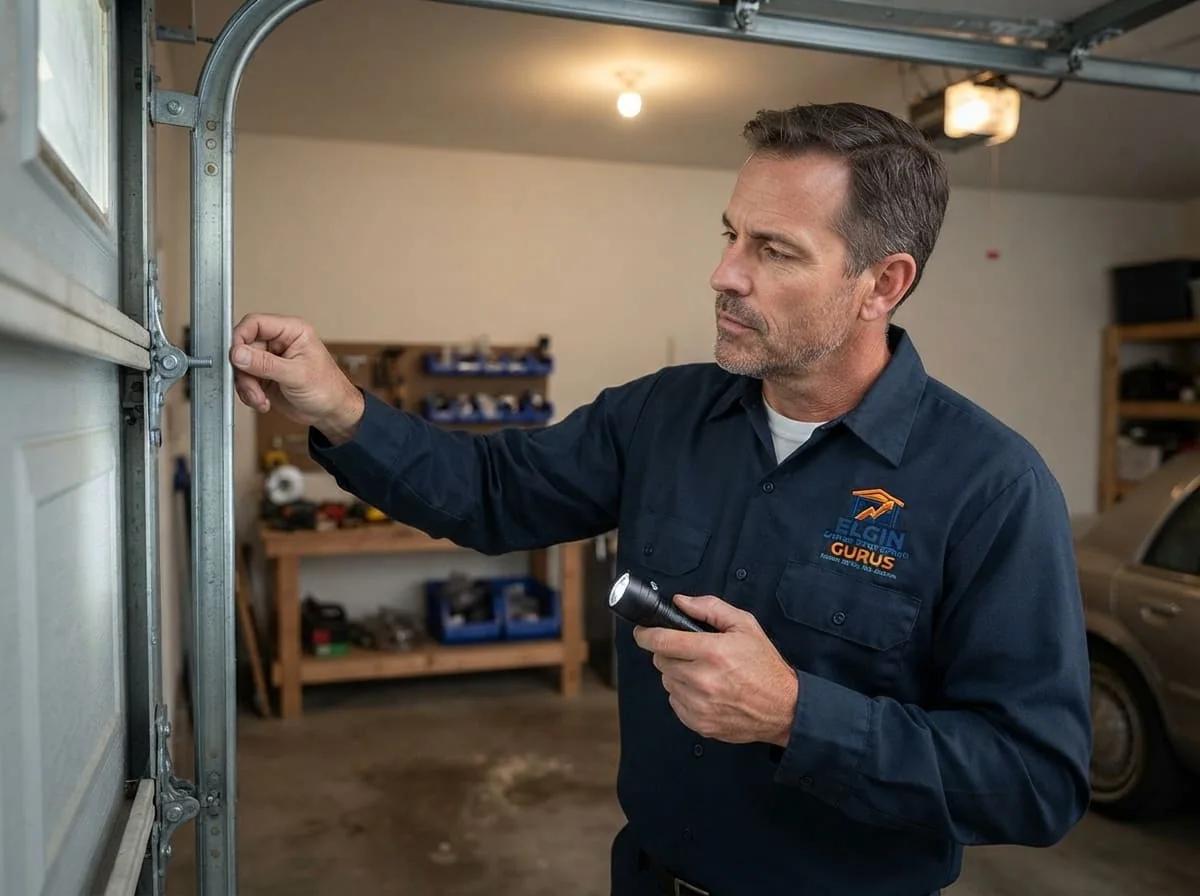
What Causes Track Damage Around Elgin
Track damage comes from a mix of sudden impacts and slower, seasonal shifting, and both are common in this area.
- Impact damage - a car bumper, a bike, a snow blower, or even a stray basketball can dent or bend a track in an instant. Vertical tracks near the bottom of the door take the brunt of this, since that's the section closest to everything moving through the garage.
- Freeze-thaw shifting - Elgin's winters bring real cold, real snow load, and repeated freeze-thaw cycles, and the concrete slab a garage sits on can shift slightly as the ground beneath it freezes, heaves, and thaws over the season. Even a small amount of slab movement can throw off the alignment between the track and the door opening, especially in older garages or ones without deep footings.
- Loose or worn wall brackets - tracks are held to the framing with brackets and fasteners that can loosen over years of vibration from daily door cycles, letting the track drift out of its original position.
- Corrosion at track joints - moisture and road salt tracked in on tires can work into the seams where track sections bolt together, weakening the joint over time.
Because freeze-thaw shifting happens gradually, it often produces the slow, creeping misalignment that homeowners describe as "the door just started acting up" with no memory of hitting anything.
How Track Repair and Realignment Works
Track work starts with figuring out whether the track can be realigned and straightened in place or whether a damaged section needs to be replaced outright. Minor bends and brackets that have simply loosened over time are usually a realignment job. A sharply kinked or crimped section, especially from a direct impact, usually needs to be swapped for a new piece of track rather than bent back, since metal that's been kinked hard enough tends to fail again at the same point.
Either way, the door has to be safely secured and the spring tension addressed before anyone works near the tracks, because a door under tension can move unexpectedly once a track is loosened. This is the step that makes track repair genuinely unsafe to improvise, and it's covered in more detail below.
Once the door is secured, we recheck the plumb and level of the vertical tracks against the frame, reset or replace the wall brackets, and confirm the horizontal track pitch is correct so the door seats fully at the top of its travel. Rollers get inspected at the same time, since a track that's been out of alignment for a while often leaves worn or flat-spotted rollers in its wake.
Why DIY Track Repair Is Risky
Garage door tracks look like something a handy homeowner could bend back with a rubber mallet and a couple of clamps, and that's exactly why track repair sends people to the emergency room. The track can't be worked on safely while the door's springs are still under tension, and releasing that tension without the right tools and technique is one of the more dangerous jobs on a home, regardless of the door's size or age.
There's also a sequencing problem. Bending a track back into rough shape without checking it against the frame can leave it "close enough" to look right while still being off by an amount that keeps grinding down rollers and straining the opener. A misjudged realignment can also let the door bind unpredictably mid-cycle, which is its own safety hazard if anyone is standing nearby.
We're not going to tell a homeowner they can't tighten a loose bracket screw. But full realignment, straightening a bent section, or swapping in new track - especially with the door still under spring tension - is where we'd ask anyone to call a technician instead of reaching for tools.
Why Elgin Homeowners Call Us for Track Repair
Marcus Reyes started Elgin Garage Door Repair Gurus in 2017 on a simple rule: diagnose before quoting, and never sell a repair as a replacement. Track problems are a good test of that rule, because it's genuinely tempting for a less careful company to point at a bent track and recommend a whole new door system when a section of track and a bracket reset would fix it.
We're locally owned and operated, based out of our Brookside Drive shop, and our technicians are background-checked and insured. We give upfront, honest pricing before any work starts, explain exactly what's bent versus what's just worn, and offer same-day appointments where possible for homes across Elgin, South Elgin, Bartlett, Streamwood, Carpentersville, St. Charles, Hoffman Estates, West Dundee, Sleepy Hollow, and Gilberts.
What to Expect When You Call
Diagnostic walkthrough
We run the door and inspect both tracks, brackets, and rollers to pinpoint exactly where the misalignment starts.
Secure the door and release spring tension
The door is safely clamped and spring tension addressed before any track work begins.
Straighten, reset, or replace the affected track section
Minor bends are realigned in place; kinked or crimped sections are replaced with new track.
Recheck plumb, level, and horizontal pitch
We confirm the full track run is straight and properly pitched so the door seats correctly.
Test cycle and roller check
We run several full cycles, checking for smooth travel and inspecting rollers that may have worn from the old misalignment.
Garage Door Track Repair in Elgin, IL FAQs
Can a bent garage door track be fixed, or does it need to be replaced?
It depends on how the damage happened. A track that's drifted out of alignment from a loose bracket or slab shift can usually be reset and realigned. A track that's been sharply kinked or crimped by an impact usually needs that section replaced, since bent metal tends to fail again at the same point.
How much does garage door track repair cost?
Cost depends on how many sections are affected, whether brackets or rollers also need attention, and whether the track can be realigned versus replaced. We provide a free upfront quote after inspecting the door so you know the full scope before any work begins.
Can I straighten a bent track myself?
We'd recommend against it. The track can't be safely worked on while the door's springs are under tension, and releasing that tension without the right tools is genuinely dangerous. A rough field fix can also look straight while still being off enough to keep damaging rollers and straining the opener.
Is a bent or misaligned track dangerous?
It can be. A door running on a bent track can bind unexpectedly mid-cycle, and in more serious cases the door can come off the track entirely. If you notice grinding, a gap between roller and track, or the door reversing on its own, it's worth having it inspected before it worsens.
How do I know if it's the track or the door itself?
Look for symptoms tied to one spot in the door's travel rather than the whole cycle - a grind, a clunk, or binding that happens at the same point every time often traces back to the track. A door that's uniformly heavy, slow, or noisy the entire cycle points more toward springs or rollers.
Does cold weather really affect garage door tracks?
Yes. Freeze-thaw cycles through an Elgin winter can shift a concrete slab slightly, and even minor movement can throw off the alignment between the track and the door opening. This tends to show up as a slow, creeping misalignment rather than sudden damage.
How long does a track repair appointment take?
A straightforward realignment or single-section replacement is usually finished in one visit. The exact time depends on how much of the track is affected and whether rollers or brackets need replacing at the same time.
Need Track Repair in Elgin, IL?
Elgin Garage Door Repair Gurus is ready to help — call now for a free, upfront quote.