
Garage Door Replacement in Elgin, IL
When a garage door is past the point of a good repair, we'll tell you honestly and walk you through a full replacement that fits your home and your budget.
- Locally owned since 2017
- Insured, background-checked techs
- Free upfront quotes
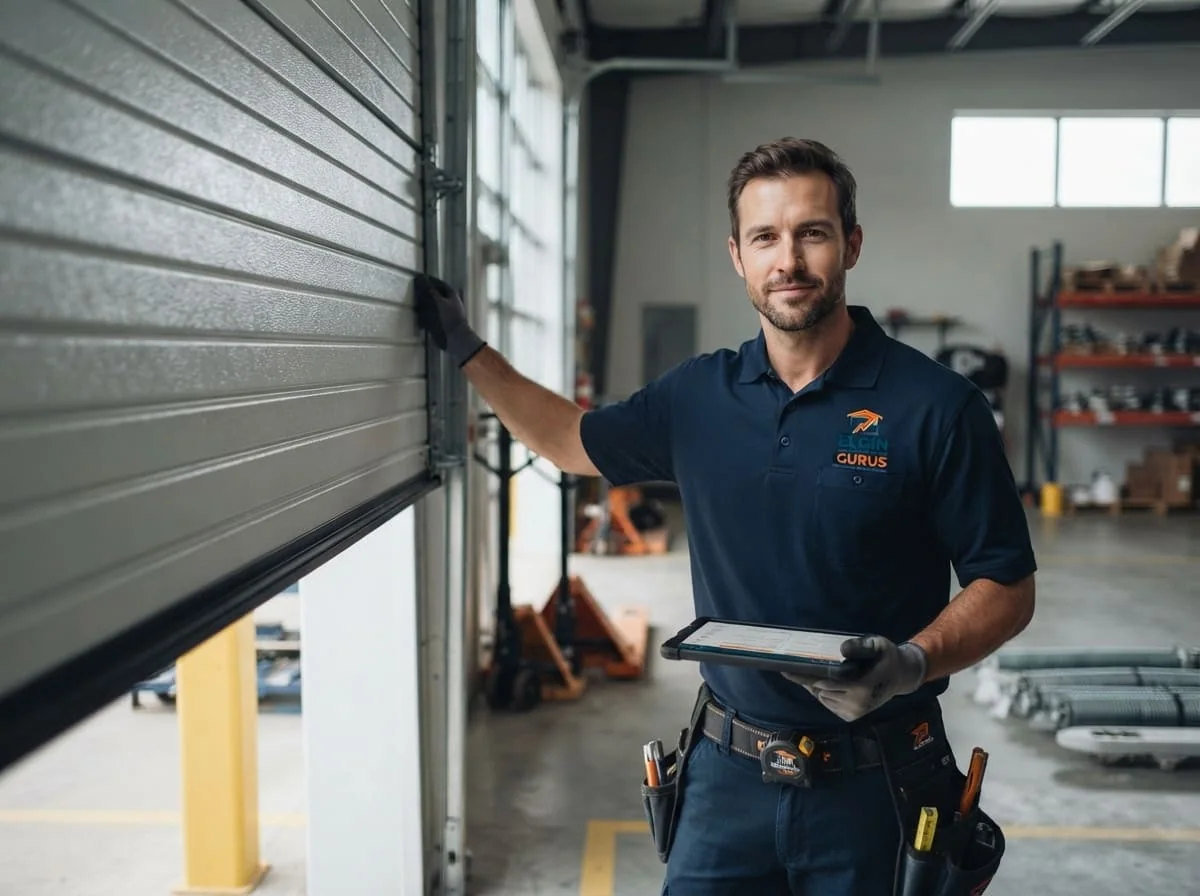
Most garage doors give you fifteen to twenty-five years of service before replacement genuinely makes more sense than another repair, and plenty of doors on Elgin's older blocks are already well past that mark. A worn-out door isn't just a cosmetic problem. Rusted-through skins, a sagging bottom panel, or a door that's been rebuilt with mismatched parts over the years all put more strain on the opener, the springs, and anyone standing underneath it.
We approach every replacement call the same way Marcus Reyes has run this company since 2017: diagnose first, and never recommend a full replacement when a repair would genuinely do the job. If your door can be fixed properly, we'll fix it and tell you so. If it can't, or if fixing it again would just be a temporary patch on a door that's failing in three or four other ways at once, we'll explain exactly why and give you a straightforward, upfront quote before any work starts.
Elgin's winters are part of that conversation too. Kane County's cold snaps make old torsion springs brittle, shrink metal tracks just enough to bind rollers, and turn a thin, uninsulated door into a cold wall between your garage and the house. A lot of the replacement calls we run between November and March aren't emergencies at all — they're homeowners who finally decided it was time to stop babying a door that was never built for this climate.
When Replacement Makes More Sense Than Another Repair
There's no single rule that tells you it's time, but a few patterns show up again and again on service calls across Elgin and the surrounding suburbs.
- Age. A steel sectional door installed in the 1990s or early 2000s has usually outlived its springs, rollers, and weatherstripping several times over. At some point the door itself — the panels, the hinges, the track alignment — is the weak link, not any one part.
- Repeated failures. If we've been out for a spring, then a cable, then a roller, all within a year or two, that's usually a sign the door's hardware is failing as a system rather than one part wearing out early. Replacing the door and its hardware together is often more sensible than chasing the next failure.
- Storm and impact damage. High wind gusts off the Fox River corridor, hail, or a bent track from backing into the door can crack or dent panels badly enough that patching them leaves a visibly weaker section. A single damaged panel can sometimes be swapped on its own — see our panel replacement page — but damage across multiple panels or a warped frame usually means the whole door needs to go.
- You want better insulation. Older doors are often a single layer of steel with no foam core at all. If you use the garage as a workshop, park a vehicle you'd rather not scrape ice off, or just want a warmer wall between the garage and an attached living space, replacement is the only way to actually fix that — a repair can't add insulation a door was never built with.
Choosing Materials and Styles for Your New Door
We don't sell one type of door to every homeowner, and we won't push a brand or a specific product line here — the right choice depends on your house, your budget, and how you use the garage. A few general considerations worth knowing before you start shopping:
- Steel doors remain the most common residential choice because they hold up well to Illinois weather and come in single-layer, double-layer, and triple-layer (steel-foam-steel) constructions. More layers generally mean more insulation and a stiffer, quieter door.
- Wood and wood-composite doors give you a warmer look, especially on older homes in the Elgin Historic District or the Craftsman-era cottages near the Watch Factory District, but real wood needs more upkeep against moisture than steel.
- Faux-wood steel or composite doors aim to split the difference — the look of wood grain with steel's lower maintenance.
- Panel style matters as much as material. Raised-panel and long-panel designs suit traditional homes; carriage-house styles with faux hardware and window inserts suit both older character homes and newer builds in westside developments like Bowes Creek and Highland Woods.
- Window inserts add natural light to the garage but are one more place for cold air to move through, so factor that in if insulation is a priority.
We'll talk through these tradeoffs on-site, measure your opening, and give you options at a few different price points rather than steering you toward the most expensive one.
Insulation and Elgin's Winters
Kane County winters routinely bring January highs near 30°F and lows around 15°F, with real snow load and hard freeze-thaw cycles that shift concrete slabs and stress door tracks. An insulated door with a foam core (rated by R-value) does two things a single-layer steel door can't: it keeps the garage itself noticeably warmer, and it puts less thermal stress on the torsion spring and opener hardware sitting right at the top of the door.
We wrote a full breakdown of how R-values work for garage doors and what actually makes sense for an Illinois home in our guide to insulated garage doors and Illinois winters — worth a read if you're deciding how much insulation to pay for versus how much is overkill for your situation. As a general rule, an attached garage under a bedroom or living space benefits the most from a well-insulated door; a detached garage used mainly for storage benefits less.
What Replacement Day Involves
A full door replacement is a bigger job than most repairs, but it's still usually done in a single visit. Here's what typically happens once you've picked a door:
- We clear the driveway and work area and protect the garage floor and walls near the opening.
- The old door, track, and hardware come out — including the torsion spring, which gets fully unwound and removed as part of the teardown.
- We inspect the opening, jambs, and header for any wood rot or framing issues that need to be addressed before the new door goes in.
- New track and hardware go up, sized and leveled for the new door's exact weight and dimensions.
- The new door is installed section by section, and a new torsion spring is sized specifically to that door's weight — reusing an old spring on a new door is a common shortcut that leads to poor balance and premature spring failure.
- We reconnect or reprogram your opener (or install a new one if you're upgrading — see our opener installation page), then test balance, travel limits, and the safety reversal sensors.
- Before we leave, we walk the door through a full open-close cycle with you and haul away the old door and packaging.
Most single-door replacements finish in a day. Double-wide doors or jobs that turn up unexpected framing repairs can run longer, which we'll flag as soon as we see it rather than after the fact.
Why Professional Installation Matters
A garage door replacement isn't a good weekend DIY project, mainly because of the torsion spring. A residential torsion spring is wound under enough tension to lift a two-hundred-plus-pound door, and winding or unwinding one with the wrong tools or technique is a well-documented way to get seriously hurt — the CPSC has published safety guidance on this exact hazard for years. Beyond the spring, getting the track alignment, door balance, and opener force settings wrong doesn't just look bad; it can make the door reverse unpredictably or fail to stop on an obstruction, which defeats the whole point of the safety sensors.
Our technicians are insured and background-checked, and every replacement includes a full balance and safety-sensor test before we consider the job done.
Permits and Other Local Considerations
Homeowners in Elgin sometimes ask whether a garage door replacement needs a city permit. In general, swapping a door and opener on an existing garage structure — without changing the framing or the size of the opening — typically doesn't require a separate permit, but that can vary based on your specific project, and the City of Elgin's Building Division is the authority on it, not us. If your project also involves widening the opening, replacing structural framing, or building a new garage, that's a different conversation, and we'd recommend checking with the city first. See the City of Elgin's residential permits page for current specifics before you schedule anything structural.
We also handle removal and disposal of your old door as part of the job, so you're not left with panels and hardware to haul off yourself.
Why Elgin Homeowners Choose Us for Replacement
Elgin Garage Door Repair Gurus has been doing this work out of our Brookside Drive shop since 2017 — nine years now serving Elgin, South Elgin, Bartlett, Streamwood, Carpentersville, St. Charles, Hoffman Estates, West Dundee, Sleepy Hollow, and Gilberts. Marcus Reyes started this company specifically because he was tired of watching homeowners get sold replacements they didn't need. That same philosophy runs the other direction on a page like this one: we only recommend a full replacement when it's genuinely the better call, and we explain exactly why before you commit to anything.
Every quote is upfront and honest, with no pressure and no surprise line items. Read more about how Marcus built the company on our about page, or if you're comparing a full replacement against just fixing what's there, our garage door repair page covers what we can typically fix instead.
What to Expect When You Call
On-site assessment
We inspect the current door and hardware, measure the opening, and give you an honest repair-vs-replace recommendation with an upfront quote.
Door and material selection
We walk through material, insulation, and style options together and confirm the exact door before ordering.
Old door removal
The existing door, track, and spring are safely disassembled and removed, and the opening is inspected for any framing issues.
New door installation
New track, hardware, and a correctly sized torsion spring go in, followed by the new door itself, panel by panel.
Testing and walkthrough
We reconnect the opener, test balance and safety sensors, and run the door through a full cycle with you before we leave.
Garage Door Replacement in Elgin, IL FAQs
How do I know if I need a new door instead of a repair?
Age, repeated hardware failures, and damage spread across multiple panels are the main signs. We'll always tell you honestly if a repair is the better option instead — we don't push replacements customers don't need.
How long does a garage door replacement take?
Most single-door replacements are finished in a single day. Double-wide doors or jobs that uncover framing repairs can take longer, and we'll flag that on-site before continuing.
Can I keep my existing garage door opener?
Often, yes, as long as it's in good working condition and compatible with the new door's weight. We'll test it during installation and let you know if an upgrade makes sense — see our opener installation page for that option.
Do I need a permit to replace a garage door in Elgin?
Typically not for a straightforward door and opener swap on an existing opening, but permit rules can vary by project, and the City of Elgin's Building Division is the final word on that, not us. Check their residential permits page or ask us and we'll point you in the right direction.
How much insulation do I actually need?
It depends on whether your garage sits under living space, how you use it, and how much winter cold matters to you day to day. We cover the tradeoffs in our blog post on insulated garage doors, and we'll talk through it in person before you choose a door.
Can I install a garage door myself?
We don't recommend it. Torsion springs are wound under enough tension to injure someone badly if handled without the right tools and technique, and getting the balance or track alignment wrong can affect how the safety sensors perform.
How much does a garage door replacement cost?
It depends on the door material, insulation level, size, and whether any framing or opener work is needed. We don't quote prices sight unseen — every job gets a free, upfront quote after we've actually looked at your garage and talked through your options.
Need Garage Door Replacement in Elgin, IL?
Elgin Garage Door Repair Gurus is ready to help — call now for a free, upfront quote.