
How to Read a Garage Door Repair Quote
Marcus Reyes breaks down what a legitimate garage door repair quote should itemize, the upselling patterns to watch for, and the questions worth asking before you sign anything.
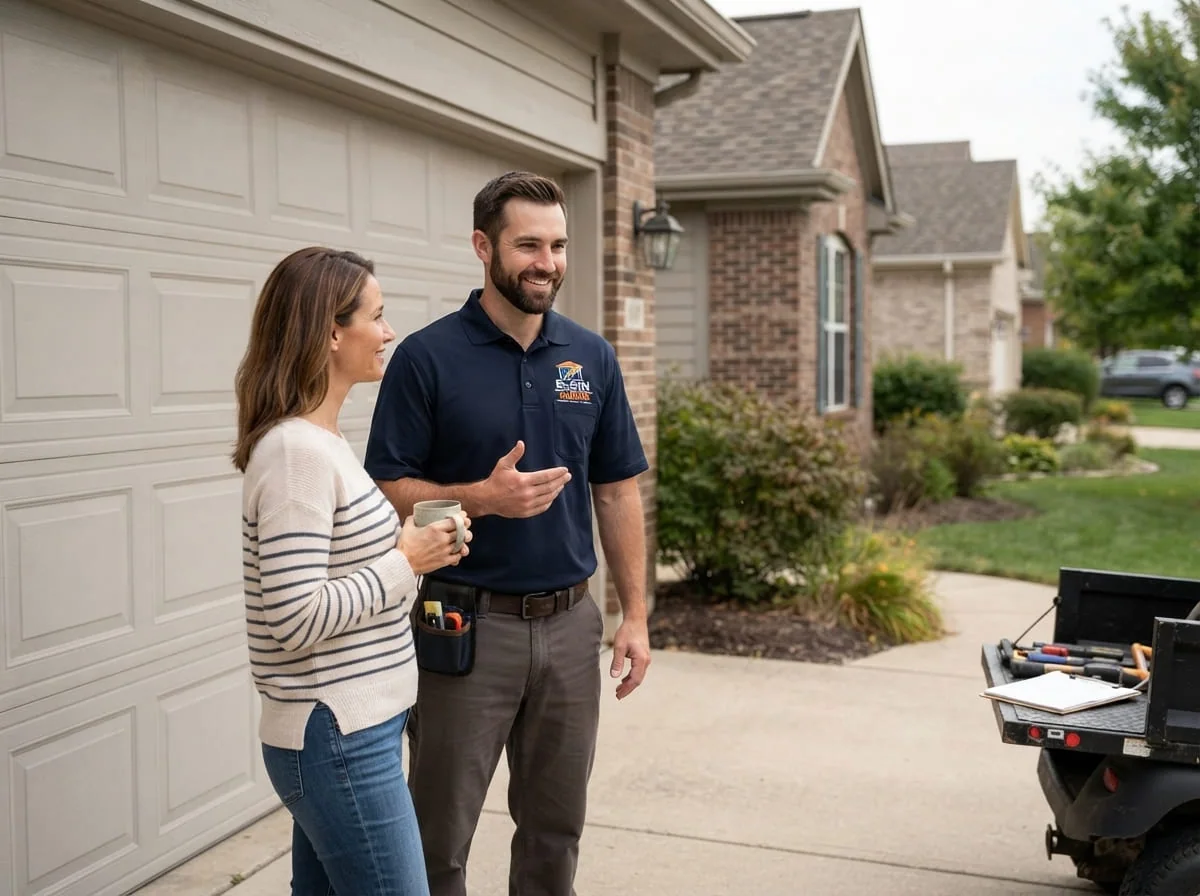
Why the Quote Matters as Much as the Repair
A repair quote for a garage door should tell you two things: exactly what's broken, and exactly what it will take to fix it. That sounds obvious, but I've looked at enough handwritten estimates from other companies over the years to know it isn't always what homeowners get. Some quotes are one line and one number, with no mention of which spring, which cable, which roller, or why the technician landed on that conclusion.
That single missing line matters more than most people realize. A vague quote isn't automatically dishonest, but it hides the reasoning behind the price, and the reasoning is exactly what you need to judge whether the repair being proposed actually matches the problem in front of you. An itemized, specific quote lets you ask follow-up questions and get real answers. A vague one just asks you to trust it and move on.
This guide walks through what a legitimate garage door repair quote should include, the upselling patterns worth watching for, the questions to ask before you sign anything, and why we structure our own quotes the way we do — whether you end up calling us or someone else.
What an Itemized Quote Should Actually List
Before a number gets written down, a technician should already be able to tell you what failed and why. That diagnosis is the foundation the rest of the quote sits on, and it should show up on paper, not just get mentioned verbally and then disappear once the invoice arrives.
A quote you can actually evaluate should include:
- The specific part or parts involved — not just "spring repair," but which spring (or springs, since torsion systems are commonly installed in pairs), which cable, which roller type, or which section of track.
- The quantity — one spring or two, one cable or both — since torsion springs on a two-spring system are usually replaced together even if only one has failed, for balance reasons a technician should be able to explain in plain terms.
- Labor as its own line, separate from parts, so you can see what you're paying for the diagnosis and installation versus the hardware itself.
- Whether the diagnostic or service visit is itemized separately, and whether that visit applies toward the repair if you decide to move forward.
- A total, shown to you in writing before any work starts — not estimated verbally and confirmed later on a signature screen.
None of this requires a dollar figure to be useful advice. What it requires is specificity. If a technician can point to the exact failed part and explain what happened in plain language, the quote that follows should reflect that same level of detail.
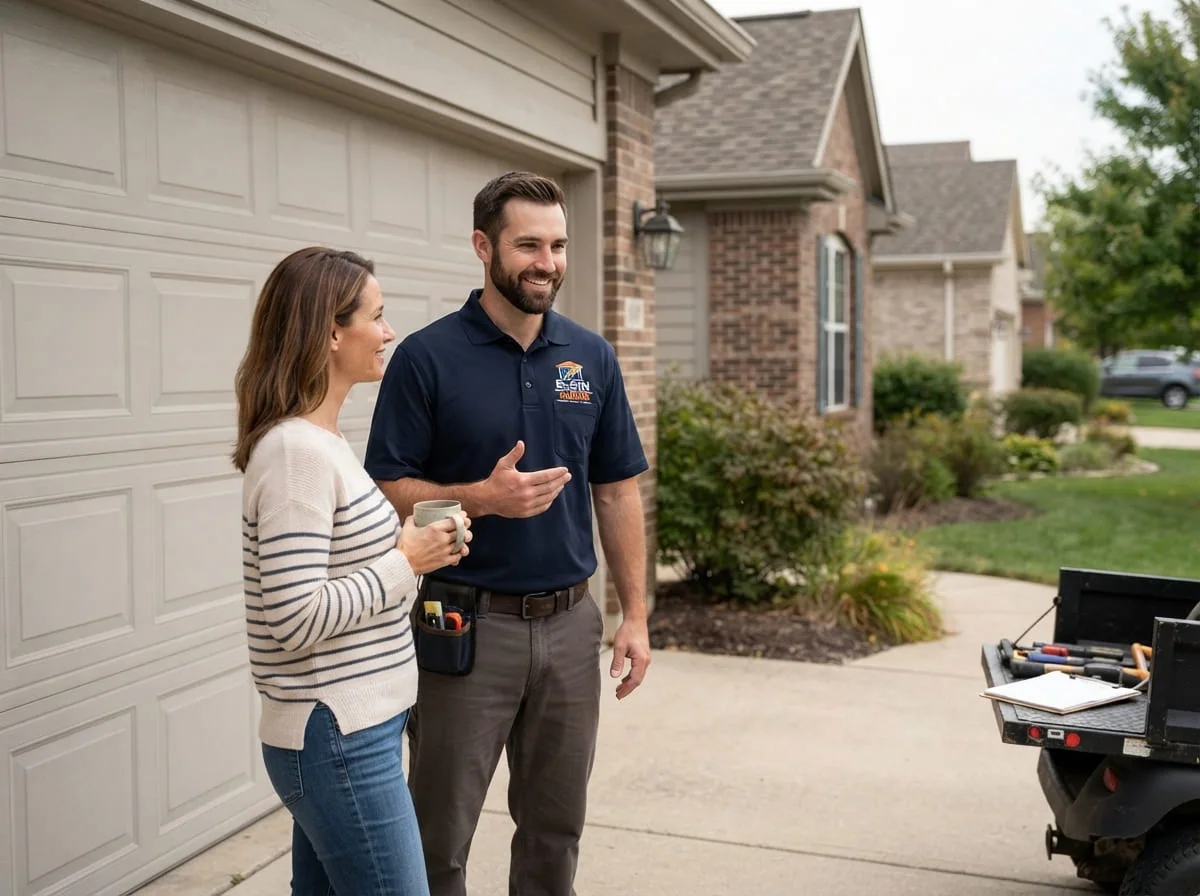
Diagnosis Comes Before the Number
Order matters here. A technician should inspect the door, identify the actual failure, and then quote — not walk in with a standard bundle already assumed before they've looked at anything. Torsion springs, for example, are rated for a certain number of open-close cycles before they're expected to wear out; DASMA's technical standards, including TDS-190 and ANSI/DASMA 102, describe how spring cycle life is measured and rated in the industry. A spring that's simply lived out its rated cycle life fails differently than one damaged by rust, a dropped door, or a hard cold snap that made brittle metal snap under tension. Those are different diagnoses, and in a properly run repair visit they lead to different quotes — not the same generic "spring replacement" line regardless of cause.
Elgin's winters make this especially relevant. Cold contracts metal, thickens opener lubricant, and makes a spring that's already near the end of its rated life more likely to let go right when you need the door most. A technician who explains that context as part of the diagnosis, instead of skipping straight to a total, is doing the job the way it's supposed to be done.
Red Flags: When a Quote Is Really a Sales Script
I spent almost a decade as a technician for one of the large national franchise chains before I started this company, working out of their Kane County branch. I liked the work itself. What I didn't like was the sales-quota culture layered on top of it — techs pushed hard to upsell full opener replacements and add-on maintenance plans that a lot of customers, especially older homeowners, didn't need and weren't always in a position to push back on. That experience is a big part of why I started Elgin Garage Door Repair Gurus, and it's exactly what to watch for when you're reading someone else's quote.
A few patterns worth treating as red flags:
- Full door replacement recommended before a specific part failure is even identified. A cracked panel or a failed spring rarely means the whole door is compromised. If replacement comes up before diagnosis does, ask why.
- Opener replacement pushed when the opener itself hasn't actually been tested. A lot of "the opener's dead" calls turn out to be dirty or misaligned safety sensors, a worn drive gear, or a simple logic reset — not a dead unit.
- Maintenance plans or "memberships" pitched mid-repair, before the current problem is even fixed.
- A single lump-sum number with no breakdown, especially when a follow-up question gets a vaguer answer instead of a clearer one.
- Pressure to decide on the spot, with the quote framed as only valid "today."
None of this means every recommendation for a bigger repair is wrong. Sometimes a door really has reached the point where patching one part just delays the same failure somewhere else. The difference is whether the technician can explain why, specifically, in terms of what they found on your door — not a script they'd give anyone.
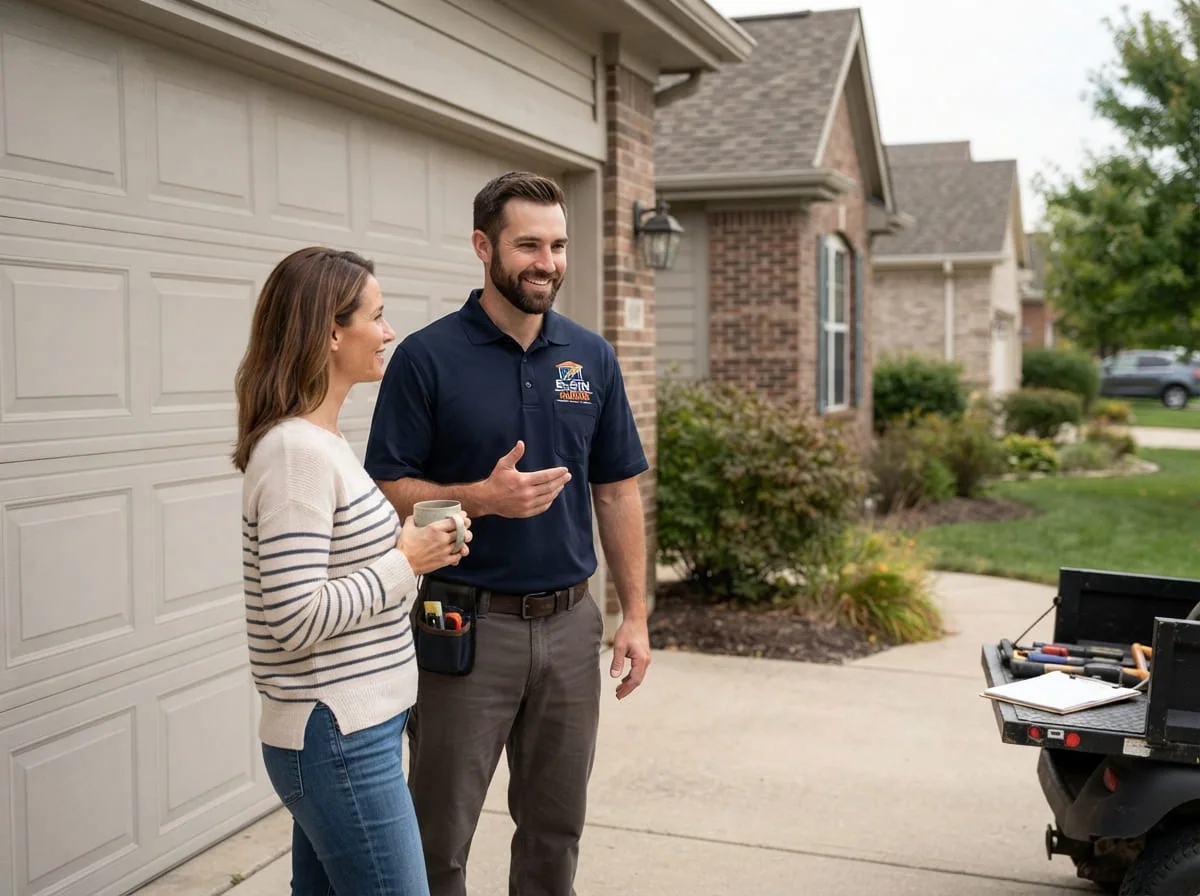
Questions to Ask Before You Sign Anything
A few direct questions, asked before you sign anything, tend to separate a straightforward repair visit from a sales pitch:
- "What exactly failed, and how did you determine that?"
- "Can this be repaired, or does it genuinely need to be replaced — and why?"
- "Can I see a written, itemized breakdown before I agree to anything?"
- "Is the diagnostic visit itself free, or does it apply toward the repair?"
- "Is this quote free whether or not I decide to move forward with you?"
- "If something related fails again soon after this repair, how is that handled?"
A technician confident in their own diagnosis should be comfortable answering all of these without getting defensive. In my experience, a vague or irritated answer to a direct question is one of the more reliable signals that something's off — more reliable, honestly, than the total itself.
Reading Between the Lines on Parts and Labor
It helps to understand a little about what you're actually being quoted on. Torsion springs and extension springs fail differently and carry different safety considerations. Extension springs, mounted above the horizontal tracks, are supposed to run through safety containment cables per CPSC guidance, since a failed extension spring under tension can otherwise become a projectile. Most residential sectional doors installed today use torsion springs mounted on a shaft above the door opening instead, which behave differently under failure but come with their own inspection points, like end bearing plates and the condition of the cable drums they work with.
Rollers matter too, and they're easy to gloss over in a quote that just says "roller repair." Nylon rollers, steel rollers, and sealed-bearing rollers wear differently, and Illinois winters are hard on the plastic ones in particular — cold makes nylon more brittle, which shows up as cracking or chipping years before a mild-climate door would show the same wear. A quote that specifies roller material, not just "rollers," is telling you something useful about what you're actually paying for.
Why We Provide Free Upfront Quotes
We quote every repair visit upfront and in writing, before any work begins, and that quote doesn't cost you anything whether you decide to move forward with us or not. That's not a marketing line. It's a direct response to years spent watching a quota system push decisions that should have been about the actual door in front of the technician, not a monthly target.
Our process stays simple: diagnose first, explain what we found in plain language, put the specific parts and labor in writing, then let you decide with real information instead of pressure. If the honest answer is a straightforward repair, that's what we quote. If a bigger repair genuinely is the right call, we'll explain exactly why, tied to what we actually found on your door — not a generic upsell. Either way, you're not signing anything until you've seen the breakdown and had a chance to ask about it.
A Simple Checklist You Can Use on Any Quote
If you want a fast way to sanity-check any quote — ours or anyone else's — run it against this list:
| Question | What to look for |
|---|---|
| Is the specific broken part named? | Not "spring repair" — which spring, and why it failed |
| Is labor listed separately from parts? | You should be able to see both lines clearly |
| Was the diagnosis explained before the price? | Diagnosis should always come first |
| Is the total shown in writing before work starts? | Not estimated verbally and confirmed later |
| Is the quote itself free? | You shouldn't have to pay to find out what's wrong |
| Were you pressured to decide immediately? | A legitimate quote holds up past a same-day deadline |
None of these checks require you to know anything about garage doors going in. They just require the quote in front of you to actually explain itself, in writing, before you agree to anything.

Marcus Reyes
Owner and lead technician at Elgin Garage Door Repair Gurus, serving Elgin, IL since 2017.
FAQs
How can I tell if a garage door quote is padded with unnecessary work?
Look for specificity. A padded quote tends to stay vague — a lump sum with no breakdown, or a recommendation for replacement without a clear explanation of which part failed and why repair wouldn't work. A straightforward quote names the exact part, explains the failure in plain language, and separates labor from parts so you can see what each line is actually for.
Should I get more than one quote for a garage door repair?
It's reasonable to do, especially for a larger repair like a full spring system or a panel replacement. Compare the diagnosis each company gives, not just the bottom line — if two companies describe completely different problems on the same door, that's worth asking follow-up questions about before you decide who to hire.
Is a free quote really free, or is there a catch?
A legitimate free quote means the diagnostic visit and the written estimate don't cost you anything, and you're under no obligation to move forward afterward. We provide free upfront quotes before any work begins, whether or not you end up choosing us for the repair.
Why do some companies push full door replacement when only one part is broken?
Sometimes it's a legitimate call — an older door with multiple compounding issues may genuinely be past the point where one repair fixes things for long. Other times it reflects a sales culture built around bigger tickets rather than the specific problem on your door. The way to tell the difference is asking the technician to explain, in detail, why replacement is being recommended over repair for your specific situation.
What's the difference between a diagnostic fee and a repair quote?
A diagnostic visit is the technician's inspection to identify what actually failed. A repair quote is the written estimate for fixing it, based on that diagnosis. Some companies fold the diagnostic visit into the repair quote at no separate cost; others charge for it separately. Either way, it should be disclosed clearly before the technician starts working, not discovered afterward.
Can a garage door company give me an accurate quote over the phone?
Only a rough range, and only for common, easily described problems. An accurate, itemized quote requires an in-person look at the specific door, spring system, and hardware involved, since two doors with the same symptom can have very different underlying causes.
Have a Garage Door Problem Right Now?
Skip the guesswork — call Elgin Garage Door Repair Gurus for a fast, honest diagnosis.