
Why Garage Door Springs Break in Winter
Torsion springs don't fail at random. Cold weather changes how steel behaves under tension, and in Elgin's winters that shift is enough to turn an aging spring into a middle-of-the-night bang.

The 6 A.M. Call That Repeats All January
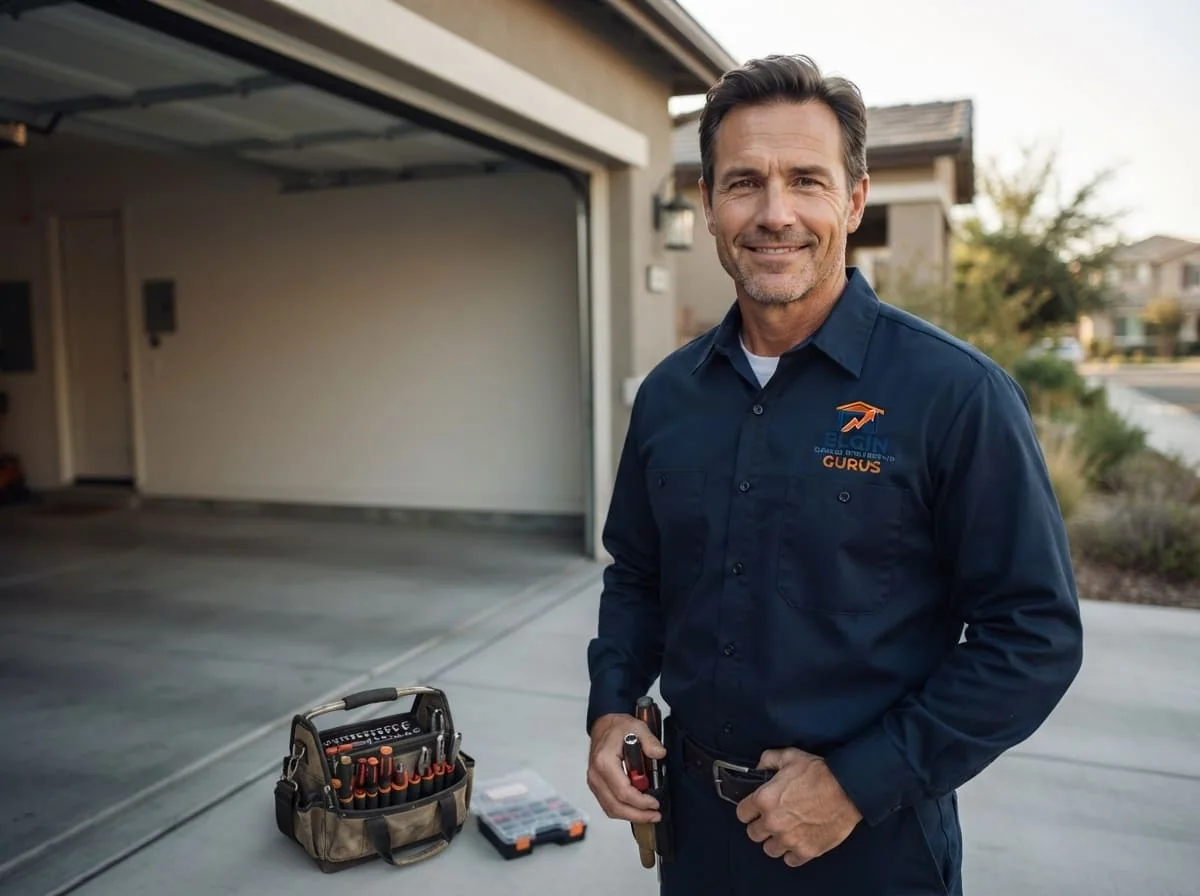
Every January, the same call comes in on the coldest mornings. A homeowner hits the wall button on their way to work, the door lurches up an inch, and either it stops dead or something inside the garage lets go with a bang loud enough to bring the neighbors outside. I've been doing this work in Elgin since 2017, and I can tell you the spring-break calls don't spread evenly through the year. They cluster hard around the first real cold snap of the season and again after any stretch of single-digit overnight lows.
That pattern isn't bad luck. A torsion spring that's been quietly losing strength for years through normal wear will often keep working fine through a mild fall. Then the temperature drops, the steel behaves differently under the same load it handled yesterday, and the spring that was one good cycle from failing finally gives out. Understanding why cold weather is the trigger, rather than the root cause, changes how you think about maintaining a door through an Illinois winter.
The Physics: How Cold Changes What Steel Can Take
A torsion spring stores energy by being wound tight around a shaft above the garage door opening. Every time the door opens or closes, that spring twists and untwists, releasing or absorbing tension to help lift a door that can weigh well over a hundred pounds. The steel wire is doing real mechanical work thousands of times over its life, and like any metal under repeated stress, it accumulates microscopic fatigue with each cycle long before it ever visibly breaks.
Temperature changes how that fatigue plays out. Steel contracts as it cools, which means a cold spring is sitting at a slightly different internal geometry than the same spring on a warm July afternoon. The coils sit tighter, the wire is marginally less able to flex without concentrating stress at existing micro-fractures, and the metal overall loses some of the ductility that lets it absorb a hard pull without cracking. None of this makes steel "brittle" the way glass is brittle, but it does mean a spring with existing fatigue damage has less margin left when the temperature drops, and the same daily cycle that was routine in September becomes the one that finishes the job in January.
Cold affects more than the spring itself. Lubricant on the track and rollers thickens in low temperatures, increasing resistance the spring has to overcome to lift the door. Nylon rollers get more brittle and can bind slightly in cold tracks. None of that shows up as a separate problem — it shows up as more resistance for an already-weakened spring to fight through, right at the moment it has the least capacity to handle it.
Cycle Life and What DASMA's Standards Actually Measure
The garage door industry rates torsion springs by cycle life rather than by age in years, because a cycle — one full open and one full close — is what actually wears a spring down. A door that opens and closes twice a day accumulates a very different lifespan than one used a dozen times daily for a home business or a family with several drivers. The Door and Access Systems Manufacturers Association (DASMA) publishes the technical standards the industry uses to test and rate spring performance, including ANSI/DASMA 102 and technical data sheet TDS-190, which cover how springs are engineered and evaluated for expected cycle life under standardized conditions.
What this means practically: a spring isn't guaranteed to last a fixed number of years, because "years" was never the unit it was engineered around. A heavily used door in a busy household can approach its rated cycle count well before a similar door used less often. Add in a wire gauge that's slightly undersized for the door's actual weight — not uncommon on older installations or after a panel replacement changed the door's weight — and a spring can be closer to the end of its useful cycle life than its age would suggest. Cold weather doesn't add cycles to the count. It reduces the safety margin available for the cycles that are left.
Why Winter Mornings Are the Breaking Point
Overnight is when a garage sits at its coldest point of the day, since there's no sun on the door and no recent cycling to generate any friction-heat in the system. The first open of the morning asks a fully cold, fully contracted spring to move a fully cold, potentially frost-stiffened door — often while carrying a slightly heavier load than usual if snow or ice has accumulated on the door's exterior panels or top section.
That first cycle of the day is consistently the highest-stress moment a spring experiences in winter, and it's why so many failures happen right as someone is trying to leave for work rather than at some random point during the afternoon. The spring has had all night to sit at its coldest and most contracted, then gets asked for full performance with zero warm-up. If there's already fatigue damage in the wire, that first cold pull is frequently the one that finds it.
Elgin's Climate and Why Local Winters Are Harder on Springs
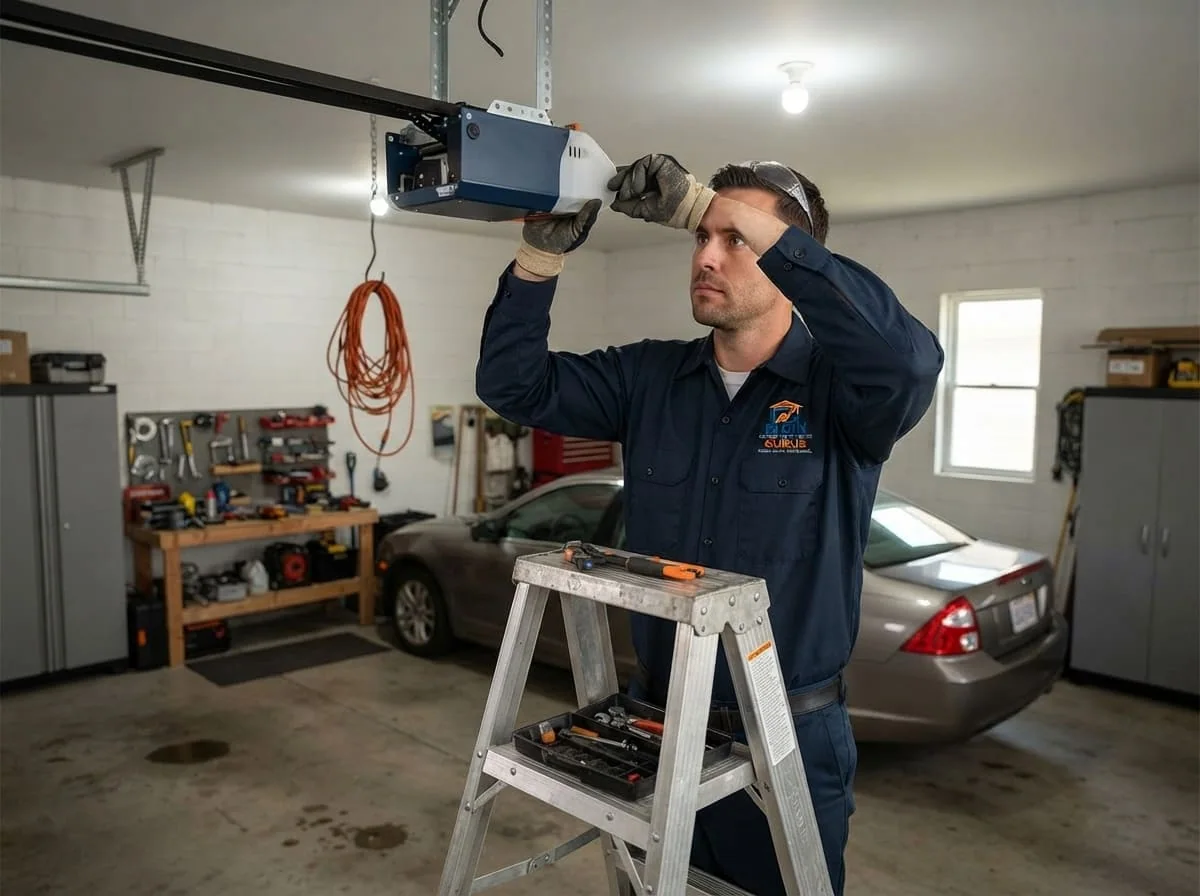
Elgin sits in a humid continental climate zone with the same winter pattern as the rest of the Chicago area — January averages a high near 30°F and a low near 15°F, with real snow load most seasons. That's a meaningful stretch of the year where garages, especially detached or unheated attached garages common in older Elgin neighborhoods, sit consistently at or below freezing for days at a time.
Freeze-thaw cycling adds a second layer to the problem. Repeated freezing and thawing can shift a concrete garage slab or affect track alignment over time, which puts uneven load on a door and, by extension, on the spring compensating for it. A door that isn't perfectly balanced already asks more of its spring on every cycle, and a slab that's moved even slightly compounds that. Homeowners in older sections of town, including homes near the Elgin Historic District and the Watch Factory District where original garage structures can be many decades old, sometimes see this show up as a door that feels harder to lift on one side, which is worth having checked before it becomes a spring failure rather than after. Current conditions and seasonal outlooks are available from the National Weather Service's Chicago office, which covers the Elgin area.
Warning Signs a Spring Is About to Go
Springs rarely fail with zero warning, even though it can feel sudden. A few signs are worth taking seriously, especially heading into a cold stretch:
- A visible gap in the coil. A healthy torsion spring has its coils sitting tightly together. A gap of an inch or more anywhere along the spring usually means it's already broken or about to separate.
- The door feels heavier than it used to. If lifting the door manually (with the opener disconnected) takes noticeably more effort than it once did, the spring is losing its ability to counterbalance the door's weight.
- A loud bang from the garage with no clear cause. This is often the sound of a spring actually breaking, sometimes hours before anyone tries to use the door.
- The opener strains, stutters, or reverses. An opener motor working harder than normal to compensate for a weakening spring is showing symptoms of a mechanical problem, not an electrical one.
- Visible rust or corrosion on the spring coils. Rust reduces the effective strength of the wire and accelerates fatigue.
Any one of these on its own is worth a look. Several together, especially as temperatures are dropping, are a good reason to have the door inspected before it fails on its own schedule.
Torsion vs. Extension Springs: Different Failure, Different Risk
Most residential sectional garage doors installed today use torsion springs mounted on a shaft above the door opening, but older homes sometimes still have extension springs running along the horizontal tracks on either side. The two systems fail differently and carry different safety considerations. Extension springs stretch and contract along the track rather than twisting on a shaft, and because a failure can release stored energy suddenly along that length, the U.S. Consumer Product Safety Commission has long recommended safety containment cables threaded through extension springs to prevent a broken spring or cable from becoming a projectile.
Cold weather affects both spring types through the same basic mechanism — reduced ductility and tighter tolerances in cold steel — but the failure mode differs. A torsion spring typically breaks with a loud bang and a door that won't lift, while an extension spring failure can involve more sudden movement along the track. If your home still has an older extension spring setup without visible safety cables, that's worth having assessed regardless of the season. For more on how the two systems compare, see our breakdown of torsion vs. extension springs.
Prevention: What Actually Extends Spring Life
You can't stop steel from contracting in cold weather, but you can reduce how much fatigue a spring is carrying into winter and how much extra strain the rest of the system adds on top of it.
- Get the door balance checked. A properly balanced door should stay in place at roughly the halfway point when disconnected from the opener and lifted manually. An unbalanced door forces the spring to do more work on every single cycle, all year, and that extra strain compounds in cold weather.
- Lubricate moving parts before the cold hits. Hinges, rollers, and the spring itself benefit from a garage-door-rated lubricant applied before the first hard freeze, which helps offset the thickening that happens naturally in cold temperatures.
- Don't force a door that's resisting. If a door feels sticky or slow on a cold morning, that resistance is a sign something in the system — track alignment, roller condition, or the spring itself — needs attention, not a sign to push the opener harder.
- Keep the garage as insulated as practical. Doors and garages exposed to the full swing of outdoor temperatures put more thermal stress on hardware than garages with even modest insulation or weatherstripping.
- Have springs inspected on a schedule, not just when something breaks. A technician can often spot a spring nearing the end of its useful cycle life before it fails, which turns an emergency call into a planned repair.
Our 15-minute maintenance routine covers the checks a homeowner can reasonably do without special tools, and it's a good habit to run through before the weather turns each fall.
What to Do the Moment a Spring Breaks
If you hear a bang or find the door won't lift, don't try to force it with the opener — that puts strain on the motor and drive system for a problem it isn't built to solve, and it won't move a door whose spring can no longer counterbalance its weight. Disconnect the opener using the manual release if you need to move the door at all, and avoid lifting it by hand if it feels unusually heavy or uneven, since a compromised spring changes how the door behaves and can shift unpredictably.
Torsion springs are under significant tension even when a door is closed, and replacing one safely requires specific tools and technique. This isn't a repair to attempt without experience. We provide broken spring repair with same-day appointments where possible, and every job starts with a free, upfront quote before any work begins so you know what you're dealing with and why. If it happens outside normal business hours, our priority scheduling means after-hours calls get returned first thing rather than going unanswered.

Marcus Reyes
Owner and lead technician at Elgin Garage Door Repair Gurus, serving Elgin, IL since 2017.
FAQs
How much does it cost to replace a broken garage door spring?
Cost depends on factors like whether one or both springs need replacing, the spring type and wire gauge required for your door's weight, and accessibility of the spring assembly. We don't quote pricing sight unseen because guessing does homeowners a disservice — every job starts with a free, honest, upfront quote after a technician actually looks at the door.
Can I replace a broken garage door spring myself?
We'd strongly discourage it. Torsion springs are wound under significant tension even when a door is fully closed, and releasing or rewinding that tension without the right tools and technique is genuinely dangerous. This is one of the few garage door repairs where professional experience isn't optional for safety reasons.
How long does a garage door spring last?
Springs are rated by expected cycle life (one open-close is a cycle) rather than by age, per industry standards like ANSI/DASMA 102. A door used several times a day will reach the end of its spring's useful life sooner than one used only occasionally, regardless of how many years have passed.
Is a broken garage door spring dangerous?
A broken spring itself is usually not immediately dangerous if the door is left alone, but you shouldn't try to force the door open with the opener or lift it manually if it feels unusually heavy or uneven. The bigger risk is a door falling unexpectedly because it's no longer properly counterbalanced.
Why did my spring break in the middle of the night with no one using the door?
A spring under tension can fail at the point its fatigue finally exceeds what the wire can hold, which doesn't require the door to be moving at that exact moment. Overnight cold is often the trigger, since the spring sits at its most contracted state for hours before the first cycle of the morning.
Does cold weather alone break a spring, or does it need to already be worn out?
Usually both play a role. Cold temperatures reduce a steel spring's flexibility and add resistance from thickened lubricant and stiffer rollers, but a spring with plenty of cycle life left typically handles winter fine. It's springs already carrying fatigue from years of use that tend to fail once the temperature drops.
Have a Garage Door Problem Right Now?
Skip the guesswork — call Elgin Garage Door Repair Gurus for a fast, honest diagnosis.